Unlock the power of hands-on learning with educational wooden puzzles that you can create right at home. Engaging children in DIY puzzle-making activities not only fosters their creativity and problem-solving skills but also provides a fun and interactive way to explore various educational concepts. Whether you're a parent, educator, or simply someone who enjoys crafting, this guide will take you through the steps to design and construct your own customized wooden puzzles that are both educational and enjoyable for kids of all ages.
Key Takeaways
- Discover the benefits of educational wooden puzzles for child development.
- Learn about different types of DIY wooden puzzles, from jigsaw puzzles to shape sorters.
- Explore the materials and tools needed to create your own wooden puzzles at home.
- Unleash your creativity by incorporating learning objectives and themed designs into your puzzle creations.
- Ensure safety and age-appropriateness when making puzzles for children.
What Are Educational Wooden Puzzles?
Educational wooden puzzles are engaging cognitive toys designed to foster learning and development in children. These puzzles are crafted from durable wood materials, offering a hands-on and tactile experience that can enhance a child's problem-solving skills, spatial awareness, and fine motor coordination.
Definition and Purpose
Wooden puzzles are a classic educational toy that challenge children to assemble intricate patterns or scenes by fitting together various shaped pieces. The purpose of these educational toys is to stimulate cognitive growth, encourage active engagement, and provide a fun and enriching learning experience.
Benefits for Kids
- Develop problem-solving and critical thinking skills
- Enhance hand-eye coordination and fine motor skills
- Improve spatial awareness and visual-perceptual abilities
- Foster creativity and imaginative play
- Promote focus, patience, and persistence
- Support the development of cognitive toys and developmental toys
By engaging with educational wooden puzzles, children can explore shapes, patterns, and colors while cultivating a range of essential skills that contribute to their overall intellectual and physical development.
"Puzzles are not just a fun activity – they are a powerful tool for child development, helping to build cognitive, motor, and problem-solving skills from an early age."
Types of Educational Wooden Puzzles
Wooden puzzles are a timeless educational tool that can foster cognitive development and learning in children. From classic wooden jigsaw puzzles to engaging shape sorters and alphabet/number puzzles, these versatile toys offer a range of benefits for young learners. Let's explore the different types of educational wooden puzzles and the specific learning objectives they support.
Wooden Jigsaw Puzzles
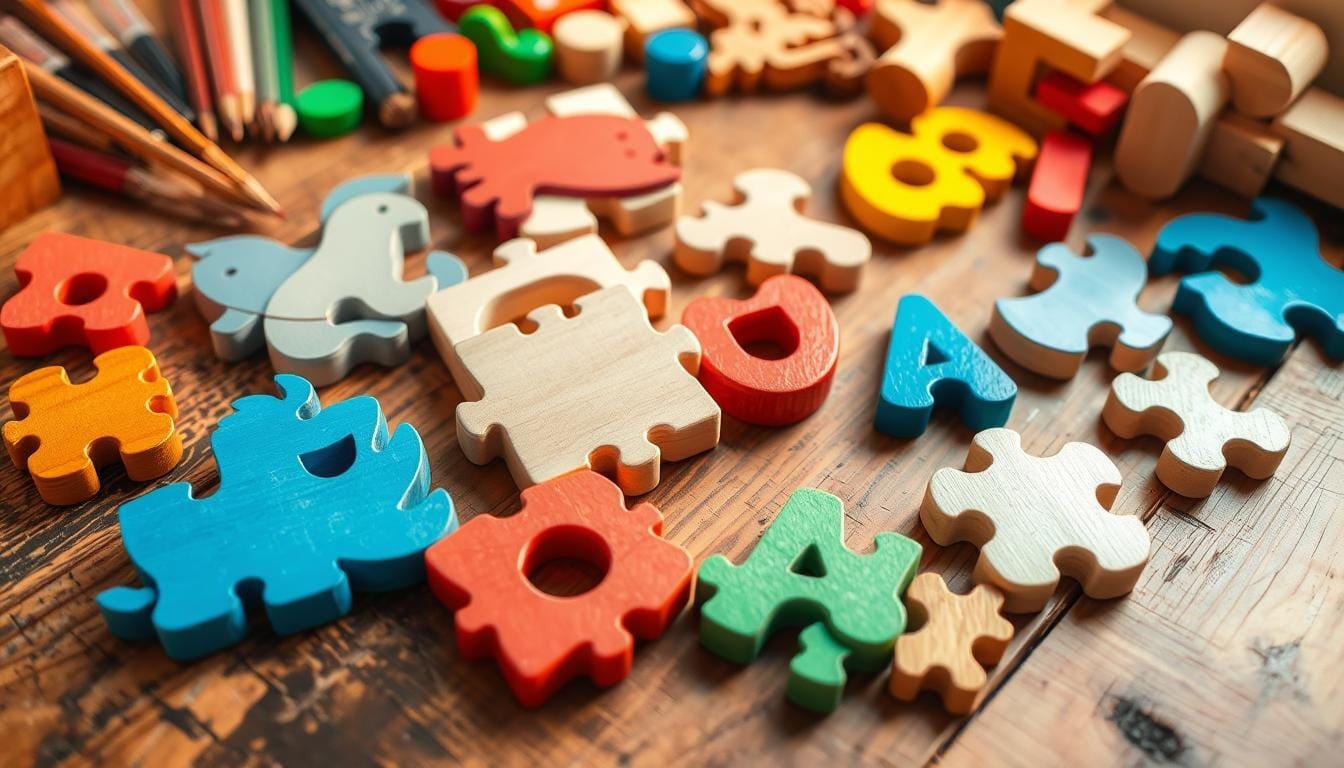
Wooden jigsaw puzzles are a beloved classic that challenge children's spatial awareness, problem-solving skills, and hand-eye coordination. As kids manipulate the interlocking pieces to create a complete picture, they develop important cognitive abilities. Wooden jigsaw puzzles can be themed around a variety of subjects, from animals and nature to vehicles and landmarks, making them engaging and educational.
Shape Sorters
Shape sorters are another classic wooden puzzle that help children develop their shape recognition and fine motor skills. These puzzles typically feature a series of openings in different geometric shapes, and kids must match the corresponding wooden pieces to the correct slots. Montessori puzzles often incorporate shape sorters to support early math and spatial concepts.
Alphabet and Number Puzzles
For budding learners, wooden alphabet and number puzzles are a fantastic way to introduce letters, numbers, and early literacy skills. These learning puzzles allow children to manipulate and arrange the individual wooden pieces, reinforcing their recognition and understanding of these fundamental concepts.
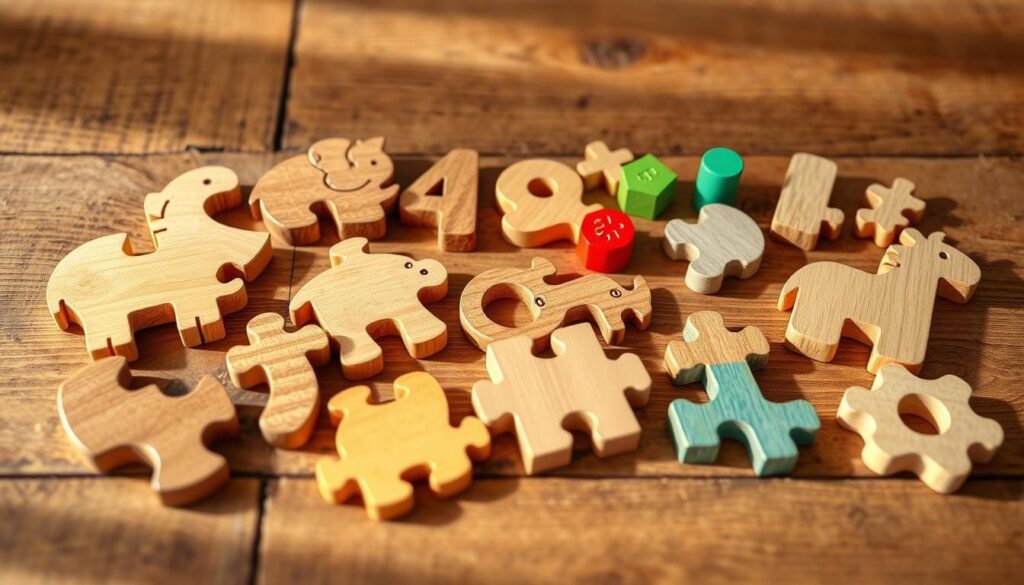
"Puzzles are not just for fun—they're also powerful learning tools that can stimulate a child's cognitive development."
By exploring these diverse types of educational wooden puzzles, children can engage in hands-on learning that supports their overall growth and development.
Materials Needed for DIY Wooden Puzzles
Creating your own educational wooden puzzles at home can be a fun and rewarding experience. Before you dive into the puzzle-making process, it's essential to gather the right materials and tools. In this section, we'll explore the key elements needed to craft high-quality DIY wooden puzzles.
Choosing the Right Wood
The type of wood you select for your puzzles can greatly impact the final product. Opt for smooth, durable wood species like pine, maple, or birch. These materials are ideal for DIY wooden puzzles as they are easy to work with and provide a sturdy foundation for your designs.
Essential Tools and Equipment
In addition to the wood, you'll need a few essential tools and equipment to bring your DIY wooden puzzles to life. These include:
- Saw (hand saw, jigsaw, or scroll saw) for cutting the wood
- Sandpaper (ranging from coarse to fine grit) for smoothing the surfaces
- Wood glue to securely assemble the puzzle pieces
- Clamps to hold the pieces in place during gluing
- Measuring tools like a ruler or tape measure
- Pencil or marker for marking and designing the puzzle
- Primer and non-toxic paints or stains (optional for decorating)
With the right DIY wooden puzzles and puzzle-making materials at hand, you'll be well on your way to creating educational and engaging wooden puzzles for your little ones.
Steps to Create a Basic Wooden Puzzle
Are you interested in exploring the world of DIY puzzle-making and woodworking for kids? Creating your own educational wooden puzzles can be a fun and rewarding project that allows you to customize the design and features to suit your child's needs and interests.
Designing Your Puzzle
The first step in creating a basic wooden puzzle is to design the puzzle itself. Consider the age and skill level of the child who will be using the puzzle. Simpler shapes and larger pieces are generally better suited for younger children, while older kids may enjoy more intricate designs and smaller pieces.
Cutting the Wood Pieces
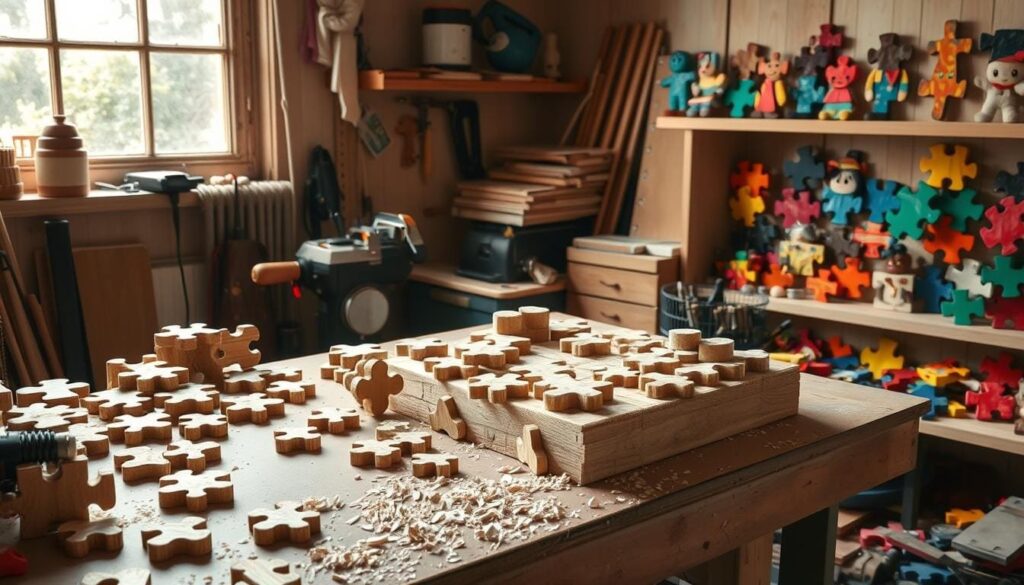
Once you have your design in mind, it's time to start cutting the wood pieces. Use a saw or a scroll saw to carefully cut out the puzzle pieces, ensuring that the shapes and sizes match your design. Remember to always prioritize safety and consider involving your child in the process, with proper supervision and age-appropriate tasks.
Sanding and Finishing
After cutting the wood pieces, it's important to sand them down to smooth out any rough edges. This will make the puzzle more comfortable and safe for little hands to handle. Finally, you can apply a non-toxic finish, such as a water-based sealant or paint, to protect the wood and give the puzzle a polished, professional look.
By following these steps, you can create a customized, educational wooden puzzle that your child will love to play with and learn from. Embrace the DIY puzzle-making experience and let your creativity shine through in your woodworking for kids project.
Enhancing Puzzles with Paint or Stains
Unleash the creativity in your child's wooden puzzles by incorporating vibrant colors and captivating designs. When it comes to adding a personal touch, the right choice of non-toxic paints and child-safe finishes can transform a simple wooden puzzle into an educational masterpiece.
Selecting Safe, Non-Toxic Options
Safety is paramount when working with young puzzle enthusiasts. Opt for non-toxic paints specifically formulated for children's toys and craft projects. Avoid harsh chemicals and opt for water-based, low-VOC (volatile organic compound) paints that are kinder to both your child and the environment.
Painting Techniques for Kids' Puzzles
Explore a variety of painting techniques to bring your wooden puzzles to life. From bold, solid colors to intricate designs, the possibilities are endless. Consider incorporating stencils, stamps, or even handprint art to create unique and engaging patterns. Encourage your child's involvement in the creative process for a truly personalized touch.
Remember, the key to successful puzzle painting lies in using child-safe finishes that protect the wood while enhancing the overall aesthetic. With a little creativity and attention to safety, you can transform a simple wooden puzzle into a cherished educational tool that sparks your child's imagination.
"Painting puzzles is a wonderful way to bond with your child and unleash their creativity. The process is just as important as the final product."
Ideas for Themed Wooden Puzzles
Crafting educational wooden puzzles offers a world of possibilities for both parents and children. Beyond the classic jigsaw puzzles, you can unleash your creativity and explore a variety of themed designs that engage young minds and spark their curiosity. From nature-inspired creations to vehicle and transportation themes, the options are endless when it comes to designing themed educational puzzles.
Nature-Inspired Designs
Bring the beauty of the natural world into your child's playtime with nature-themed wooden puzzles. These puzzles can feature vibrant flowers, majestic trees, or serene landscapes, encouraging kids to explore the wonders of the great outdoors. As they assemble the pieces, they'll not only develop their problem-solving skills but also cultivate a deeper appreciation for the natural environment.
Vehicle and Transportation Themes
For the budding transportation enthusiasts, vehicle-themed wooden puzzles are a fantastic way to fuel their imagination. Puzzles featuring cars, trucks, trains, or airplanes can introduce young learners to different modes of transportation and their associated STEM toys. Assembling these puzzles can help children understand the various components and functions of different vehicles, fostering their curiosity and understanding of the world around them.
Animal and Habitat Puzzles
Captivate your child's interest in the animal kingdom with wooden puzzles that showcase a diverse array of creatures and their habitats. From playful puppies to majestic lions, these puzzles can educate and entertain. As they piece together the puzzle, children can learn about the unique characteristics and environments of different animals, sparking their natural curiosity and love for the natural world.
By incorporating these themed educational puzzles into your child's playtime, you can cultivate their learning and development in a fun and engaging way. Whether they're exploring nature, transportation, or the animal kingdom, these wooden puzzles will undoubtedly become cherished STEM toys that foster their creativity, problem-solving skills, and understanding of the world around them.
Incorporating Learning Objectives
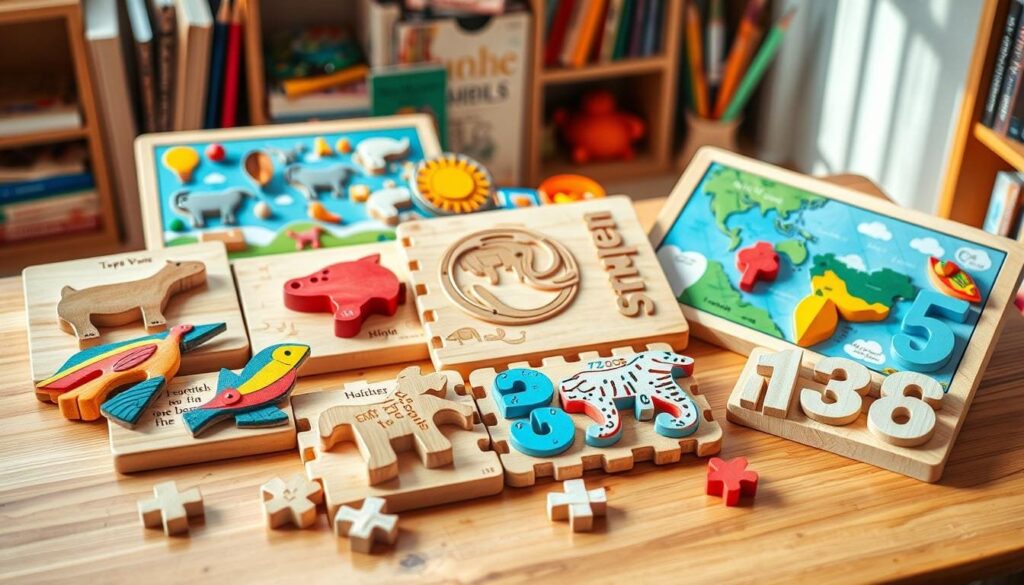
When crafting educational wooden puzzles, it's essential to incorporate specific learning objectives that support children's cognitive development. By thoughtfully integrating elements like number recognition, letter identification, shape sorting, and color matching, you can transform these DIY toys into engaging learning tools.
Teaching Numbers and Letters
Wooden puzzles provide an excellent opportunity to help young learners master the basics of numeracy and literacy. Consider designing puzzles that feature numbers, letters, or a combination of both, allowing children to practice recognition and association. These educational toys not only entertain but also lay the foundation for essential academic skills.
Exploring Shapes and Colors
In addition to numeracy and literacy, learning puzzles can also be designed to enhance a child's understanding of shapes and colors. Puzzles that incorporate different geometric forms or vibrant color schemes encourage kids to observe, identify, and sort these fundamental concepts. This hands-on exploration of cognitive toys supports the development of crucial spatial and visual recognition abilities.
"Integrating specific learning objectives into wooden puzzles transforms these toys into powerful educational tools, fostering cognitive growth and nurturing a love for learning."
By thoughtfully incorporating these learning elements into wooden puzzles, you can create educational toys that are not only visually appealing but also actively engage and challenge young minds. The process of assembling these learning puzzles becomes a fulfilling experience, where children build problem-solving skills and explore the world around them through the lens of cognitive toys.
Age-Appropriate Puzzle Designs
When it comes to educational wooden puzzles, one size does not fit all. Designing puzzles that cater to different age groups is crucial for engaging young minds and fostering their cognitive development. From simple chunky puzzles for toddlers to more challenging brain teasers for older kids, the key is to match the puzzle's complexity with the child's developmental stage.
Toddler-Friendly Options
For the littlest puzzle enthusiasts, opt for large, chunky pieces that are easy to grasp and manipulate. These developmental toys should feature bold, contrasting colors and familiar shapes, such as animals, vehicles, or basic geometric forms. The goal is to encourage hand-eye coordination, shape recognition, and problem-solving skills in a fun and accessible way.
Challenging Puzzles for Older Kids
As children grow, their cognitive abilities and problem-solving skills develop, making them ready for more complex brain teasers. Wooden puzzles with smaller pieces, intricate patterns, and harder-to-distinguish shapes can challenge older kids and stimulate their critical thinking. Consider incorporating themes related to science, geography, or popular interests to keep them engaged and learning.
"The key to designing age-appropriate puzzles is to strike a balance between challenge and enjoyment. The right puzzle can unlock a world of learning and discovery for children of all ages."
By tailoring wooden puzzles to different developmental stages, you can ensure that kids of all ages can reap the benefits of these engaging and educational toys. Whether it's a simple shape sorter or a detailed landscape puzzle, the right puzzle design can unlock a world of learning and discovery.
Engaging Kids in the Puzzle-Making Process
Crafting educational wooden puzzles can be an exciting hands-on learning experience for children. By involving kids in the puzzle-making process, you can foster their creativity and nurture their problem-solving skills. This collaborative approach not only enhances the learning experience but also creates a sense of ownership and pride as they bring their creations to life.
Encouraging Creativity
Encourage kids to participate in the design phase of the puzzle-making process. Provide them with a variety of templates, shapes, and themes, and let them express their artistic flair. This not only stimulates their creative problem-solving but also allows them to infuse their unique personalities into the final product.
Problem-Solving Skills Development
Puzzles inherently challenge children to think critically and find solutions. Invite kids to actively engage in the puzzle-making steps, such as cutting, sanding, and assembling the pieces. This hands-on involvement fosters a deeper understanding of the construction process and encourages hands-on learning as they troubleshoot and overcome challenges.
By empowering children to participate in the creative and problem-solving aspects of puzzle-making, you can nurture their sense of accomplishment and ignite their enthusiasm for learning through play.
"Engaging children in the puzzle-making process allows them to take ownership of their learning and unleash their innate creativity."
Safety Considerations When Making Puzzles
When crafting educational wooden puzzles for children, prioritizing safety is paramount. As parents and caregivers, we have a responsibility to ensure that the toys we create are not only engaging but also secure for young hands to explore. In this section, we'll delve into two crucial safety aspects to consider when making puzzles at home: avoiding sharp edges and utilizing non-toxic materials.
Avoiding Sharp Edges
One of the primary concerns when working with wood is the potential for sharp edges. To mitigate this risk, it's essential to thoroughly sand all the puzzle pieces, ensuring a smooth, rounded finish. Proper sanding techniques are key to preventing cuts and scratches that could harm a child's delicate skin. Additionally, it's wise to inspect each piece carefully, running your fingers along the edges to identify and address any remaining rough spots.
Using Non-Toxic Materials
Equally important is the selection of materials used in the puzzle-making process. When it comes to child safety, it's crucial to opt for non-toxic paints, varnishes, and adhesives. Avoid using any materials that could potentially release harmful chemicals or fumes, as young children may inadvertently ingest or breathe them in during playtime.
- Look for water-based, child-friendly paint options that are free of lead and other toxic substances.
- Choose natural finishes, such as beeswax or plant-based oils, to protect the wood without introducing harmful chemicals.
- Ensure that any glues or adhesives used are non-toxic and safe for young children.
By prioritizing safety and taking the necessary precautions, you can create engaging and educational wooden puzzles that promote learning and discovery without compromising the well-being of the little ones who will enjoy them.
Where to Share Your Wooden Puzzles
As a talented crafter of handmade educational toys, finding the right outlets to share or sell your wooden puzzles can be an exciting opportunity. Whether you're looking to give back to your local community or transform your hobby into a small business venture, there are plenty of avenues to explore.
Community Events and Craft Fairs
One of the best ways to showcase your handmade educational wooden puzzles is by participating in community events and local craft fairs. These vibrant gatherings allow you to connect with like-minded enthusiasts, demonstrate your craftsmanship, and potentially find new customers. Craft fairs, in particular, can be an excellent platform to sell your handmade educational toys directly to the public.
Online Platforms for Selling Crafts
- In addition to in-person events, consider leveraging online marketplaces to reach a wider audience for your craft fair offerings.
- Platforms like Etsy, Amazon Handmade, and local online classifieds provide excellent opportunities to list and sell your handmade educational toys.
- These online spaces allow you to showcase your work, share your story, and build a loyal customer base for your unique wooden puzzles.
Whichever route you choose, sharing your passion for creating handmade educational toys can be a rewarding experience. Whether it's bringing joy to children at a local craft fair or connecting with customers around the world through online marketplaces, your wooden puzzles can make a meaningful impact.
"The true joy of handmaking is in the process, not just the final product. Sharing that joy with others is what truly makes it special."
Final Thoughts on Educational Wooden Puzzles
Engaging children in the creation of educational wooden puzzles is a remarkable way to foster hands-on learning and encourage a love for problem-solving. These captivating DIY projects not only unlock a world of cognitive development but also provide a deeply rewarding family experience. From mastering spatial awareness to enhancing fine motor skills, the benefits of crafting wooden puzzles are multifaceted and profound.
Fostering Learning Through Play
By inviting children to participate in the design and construction of their own wooden puzzles, parents and educators can seamlessly integrate learning into the realm of play. This approach sparks a child's natural curiosity, inspiring them to explore shapes, colors, and patterns in a hands-on, immersive manner. The act of problem-solving and piecing together the puzzle pieces cultivates crucial critical thinking abilities that will serve them well throughout their educational journey.
The Joy of Creating Together
Beyond the educational merits, the process of creating educational wooden puzzles together as a family fosters a sense of togetherness and shared accomplishment. The collaborative nature of this activity encourages communication, teamwork, and the exchange of ideas – all while cultivating cherished memories. Whether it's a nature-inspired design or a transportation-themed puzzle, the joy of crafting these hands-on learning tools is an experience that will resonate with children and adults alike.
FAQ
What are educational wooden puzzles?
Educational wooden puzzles are hands-on learning toys that help children develop cognitive, motor, and problem-solving skills. They typically feature wooden pieces that fit together to create a complete image or shape, promoting spatial awareness, fine motor skills, and early learning concepts.
What are the benefits of educational wooden puzzles for kids?
Educational wooden puzzles offer numerous benefits for children's development, including:
- Improving hand-eye coordination and fine motor skills
- Enhancing problem-solving and critical thinking abilities
- Fostering cognitive and spatial awareness
- Promoting early learning of shapes, letters, numbers, and more
- Encouraging focused attention and patience
- Stimulating creativity and imagination
What are the different types of educational wooden puzzles?
Some common types of educational wooden puzzles include:
- Jigsaw puzzles: Featuring interlocking wooden pieces that form a complete picture or image
- Shape sorters: Puzzles that challenge children to match and fit different shaped pieces into corresponding openings
- Alphabet and number puzzles: Puzzles that help kids learn letters, numbers, and basic math concepts
What materials are needed to create DIY wooden puzzles?
To make your own educational wooden puzzles at home, you'll need a few essential materials, such as:
- Smooth, child-safe wood (e.g., birch, maple, or pine)
- Saw (hand saw, jigsaw, or scroll saw)
- Sandpaper (various grits)
- Wood glue
- Non-toxic paints or stains (optional)
How do I design and create a basic wooden puzzle?
The steps to create a basic wooden puzzle include:
1. Designing your puzzle: Decide on the image, shape, or learning concept you want to incorporate.
2. Cutting the wood pieces: Use a saw to cut the wooden pieces to the desired shapes and sizes.
3. Sanding and finishing: Smooth the edges and surfaces of the puzzle pieces, then apply a non-toxic finish if desired.
How can I make wooden puzzles more engaging for children?
To enhance the educational value and appeal of your wooden puzzles, you can:
- Incorporate vibrant, child-safe paints or stains
- Explore themed designs (e.g., nature, vehicles, animals)
- Integrate learning objectives like letters, numbers, and shapes
- Adjust the difficulty level to match the child's age and developmental stage
How can I involve my child in the puzzle-making process?
Engaging children in the puzzle-making process can be a fun and educational experience. Some ways to involve them include:
- Allowing them to assist with sanding and painting the puzzle pieces
- Encouraging them to contribute to the design and theme of the puzzle
- Guiding them through the assembly and problem-solving steps
- Celebrating their creativity and accomplishments
What safety considerations should I keep in mind when making wooden puzzles?
When creating wooden puzzles for children, it's essential to prioritize safety by:
- Ensuring all edges are properly sanded and smooth
- Using non-toxic, child-safe materials throughout the process
- Supervising children during any hands-on puzzle-making activities
- Regularly inspecting the puzzles for any potential hazards
Looking for More Woodworking Projects? 🛠️
If you’re passionate about woodworking and ready to tackle a variety of projects, Ted’s Woodworking Plans offers over 16,000 detailed plans for all skill levels. From furniture to garden projects and everything in between, these plans include step-by-step instructions, materials lists, and 3D schematics to make every build easier.
Whether you’re a beginner or experienced woodworker, this collection is an incredible resource to expand your skills and bring your ideas to life. Click below to explore Ted’s Woodworking Plans and discover your next project!