Your kitchen is the heart of your home. But if the colors feel off or the wood tones clash, the whole space feels... stuck. You've pinned hundreds of farmhouse kitchens that just work — warm wood, soft paint, that effortless lived-in look. Here's how to actually get there.
This isn't about ripping everything out. It's about understanding which wood tones pair with which paint colors, so every choice you make from here on out clicks into place. Let's break it down.

1. Warm Oak Cabinets with SW Accessible Beige Walls
This is the easiest pairing to get right — and the hardest to mess up.
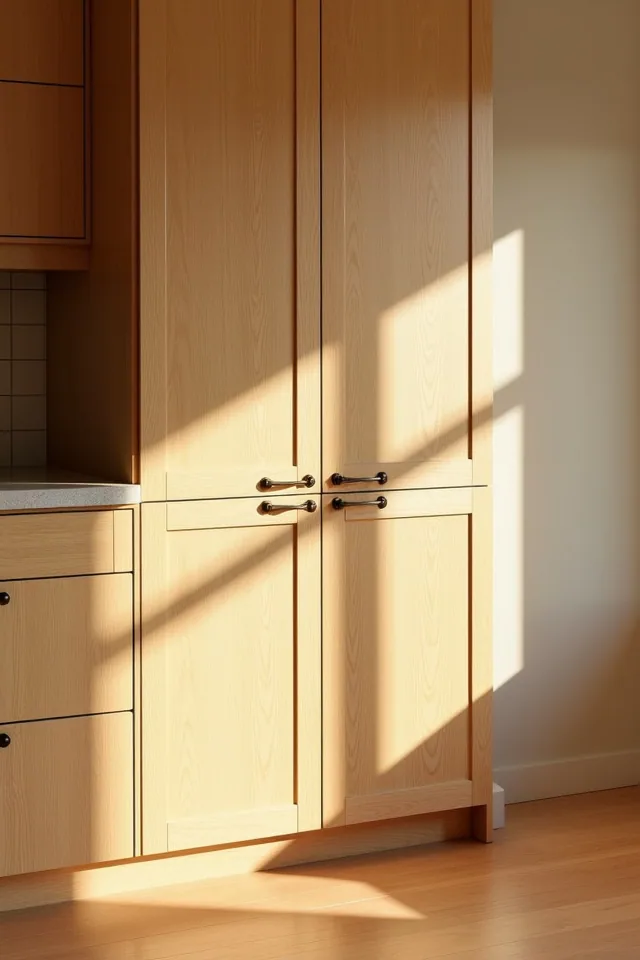
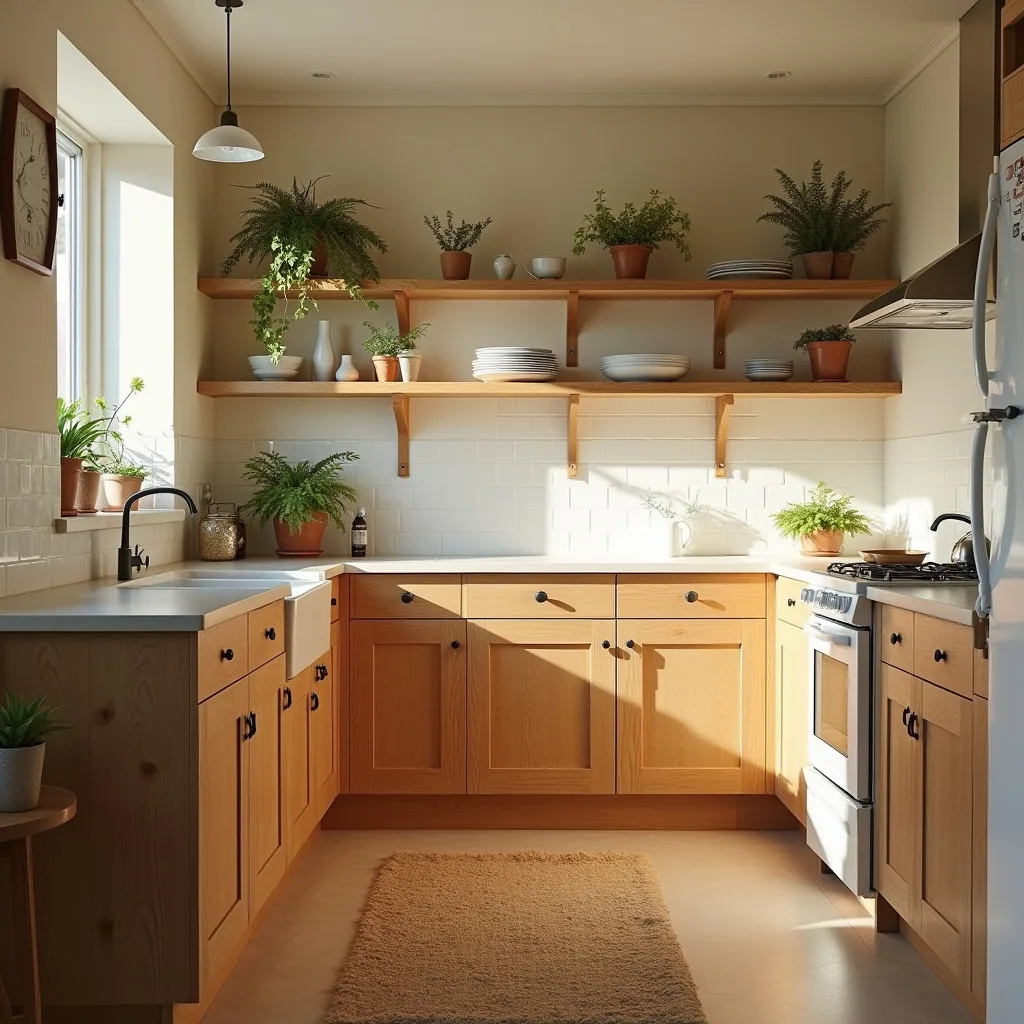
Honey oak cabinets get a bad rap, but paired with the right warm neutral on the walls, they stop looking dated and start looking intentional. SW Accessible Beige has just enough warmth to complement the golden undertones in oak without fighting them.
- Avoid cool grays or stark whites — they'll make oak look orange
- Add open shelving in the same oak tone to balance the room
- Use matte black hardware to ground the warmth
This combo works beautifully in kitchens with lots of natural light. The beige reads soft, not muddy, and the oak feels like it belongs.
2. White Shaker Cabinets with Reclaimed Wood Shelving
White cabinets are farmhouse non-negotiables. But all-white kitchens can feel cold.
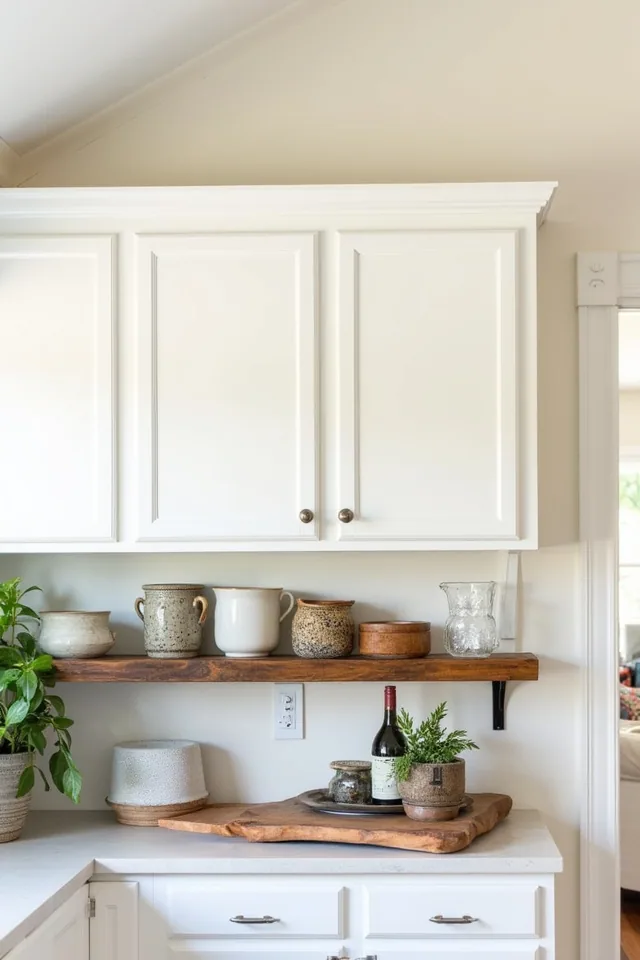
The fix? Reclaimed wood floating shelves or a chunky wood range hood. The contrast is instant warmth. Look for wood with visible grain and a weathered finish — barn wood, salvaged pine, anything that doesn't look new.
- Mount shelves where you'd normally have upper cabinets
- Style with white dishes, greenery, and a few wood cutting boards
- Keep the wood tone consistent across all open shelving
Pair this with SW Pure White on the walls. It's a true white with no undertones, which lets the wood be the star without competing.
3. Walnut Butcher Block Island with Creamy White Perimeter
Your island is allowed to be the statement piece.
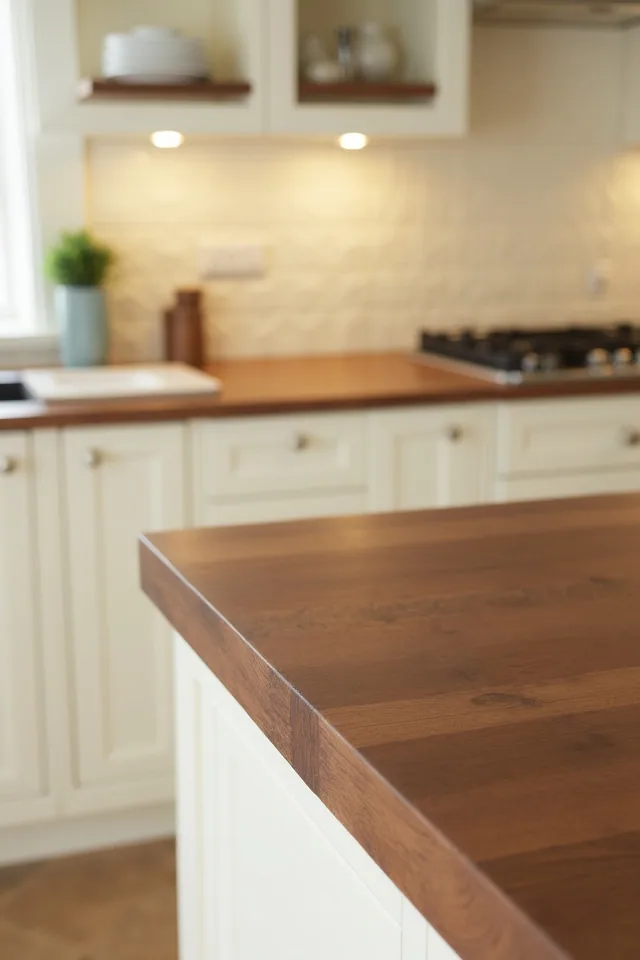
While your perimeter cabinets stay soft and neutral, a walnut butcher block island adds richness without overwhelming the space. Walnut has deep chocolate tones that feel expensive and timeless — nothing cutesy about it.
- Keep the island base painted to match perimeter cabinets
- Walnut countertop only — no need to stain the whole island dark
- Add brass or aged bronze hardware to echo the warm wood
Use BM White Dove on all cabinetry. It's warmer than pure white but still light enough to let the walnut pop. This pairing works in any size kitchen — the island becomes the anchor.
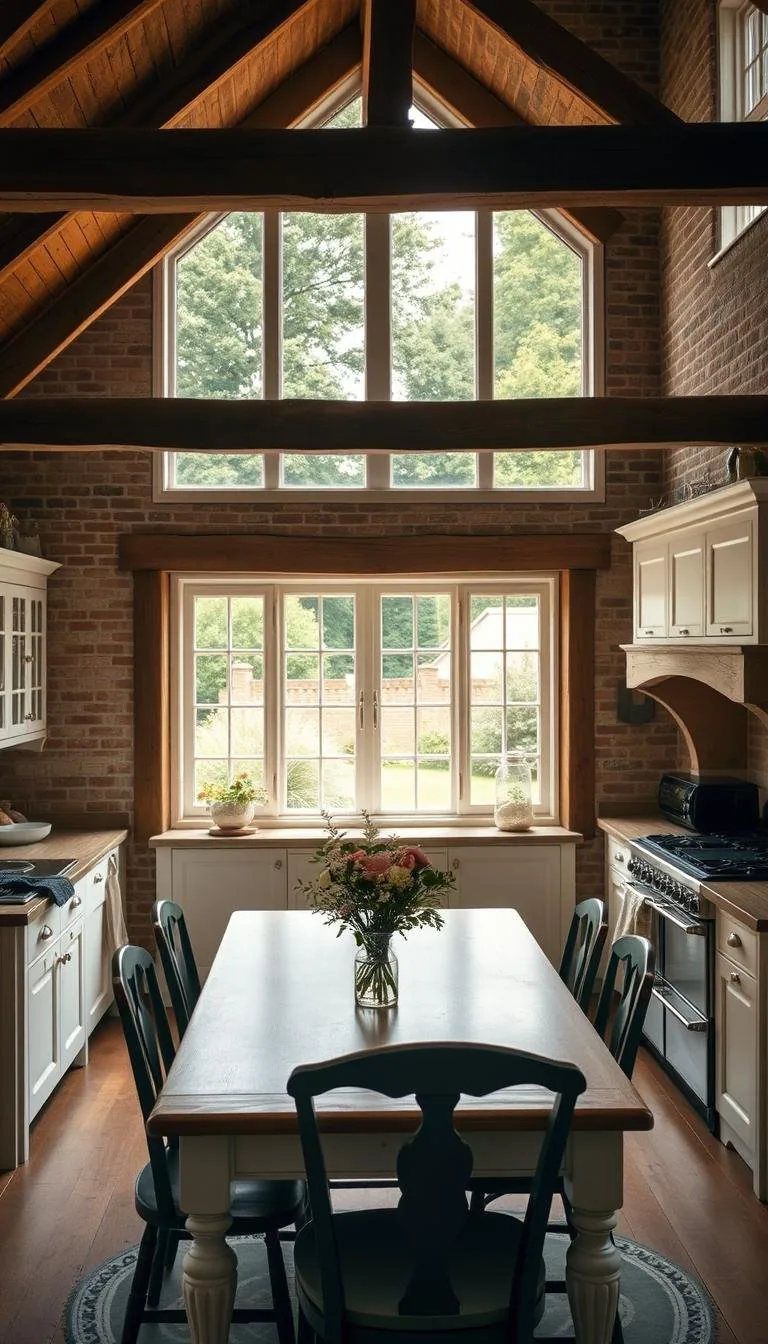
4. Natural Pine Ceiling Beams with SW Repose Gray Walls
Exposed beams change everything about a kitchen's character.
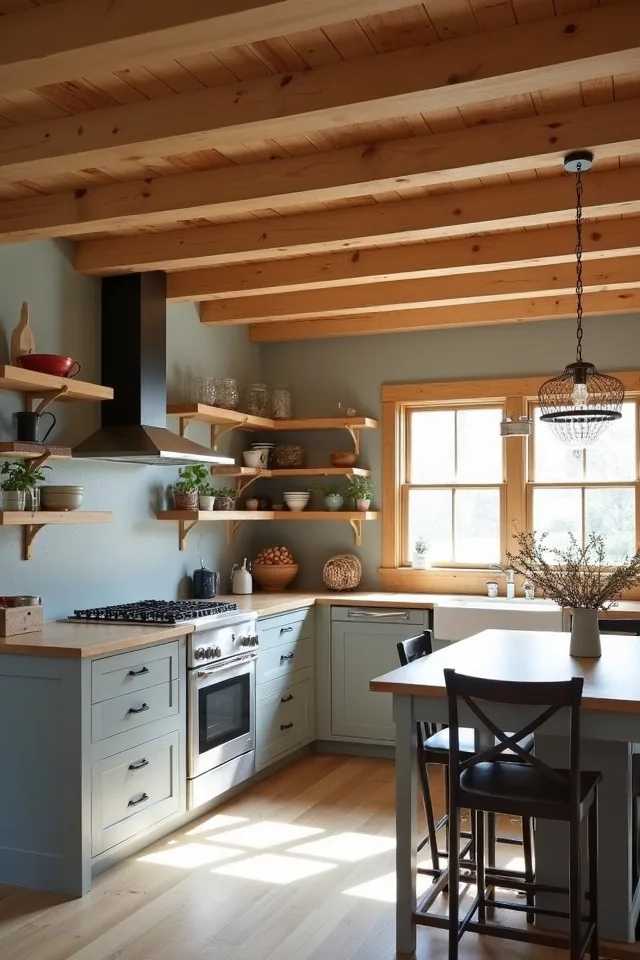
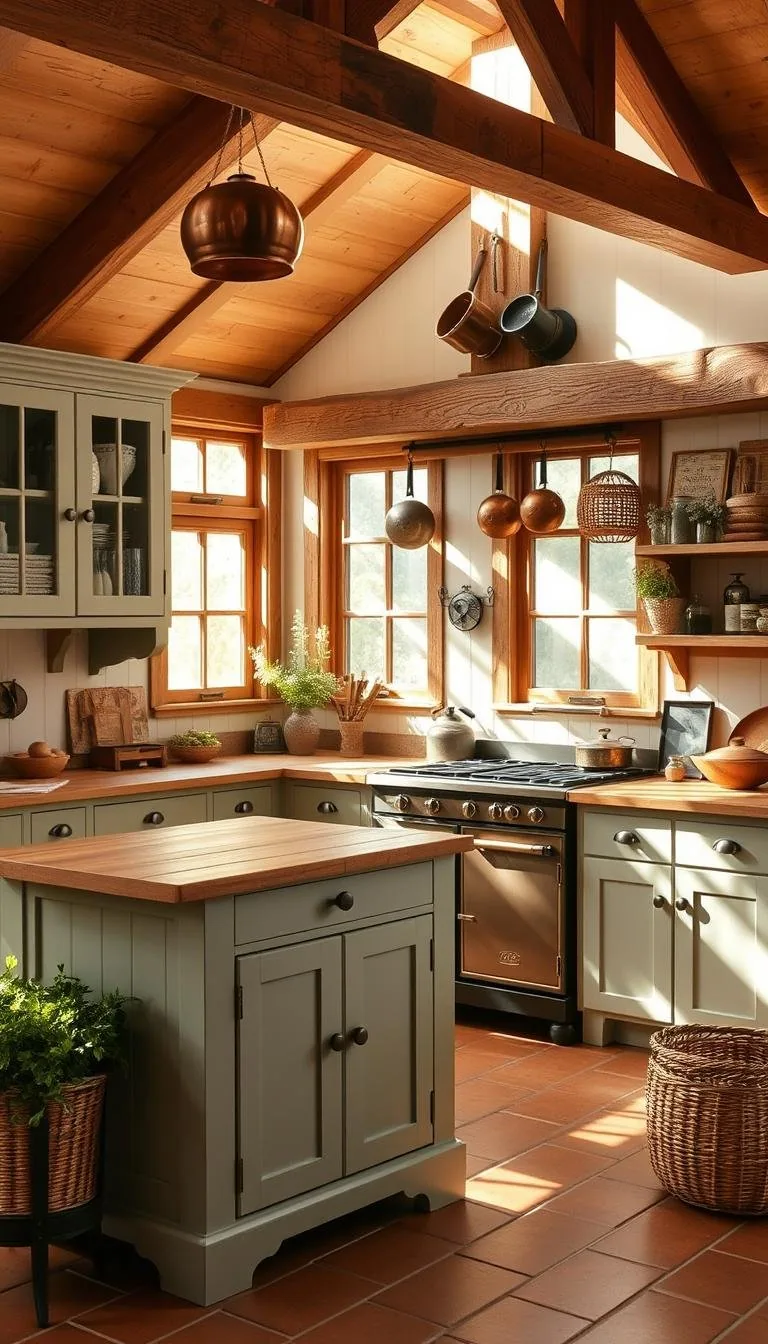
Natural pine beams — unstained, just sealed — bring in texture and warmth from above without demanding attention. SW Repose Gray is the perfect backdrop. It's a soft, true gray with the tiniest warm undertone, so it doesn't turn icy next to natural wood.
How to Style It
- Leave beams their natural color — no staining or painting
- Use the same pine tone for open shelving or a pot rack
- Pair with white subway tile and black fixtures
This combination works especially well in kitchens with vaulted ceilings. The beams draw your eye up, making the whole space feel bigger and more intentional.
5. Medium-Stain Wood Floors with White and Gray Two-Tone Cabinets
Two-tone cabinetry isn't going anywhere — if you do it right.
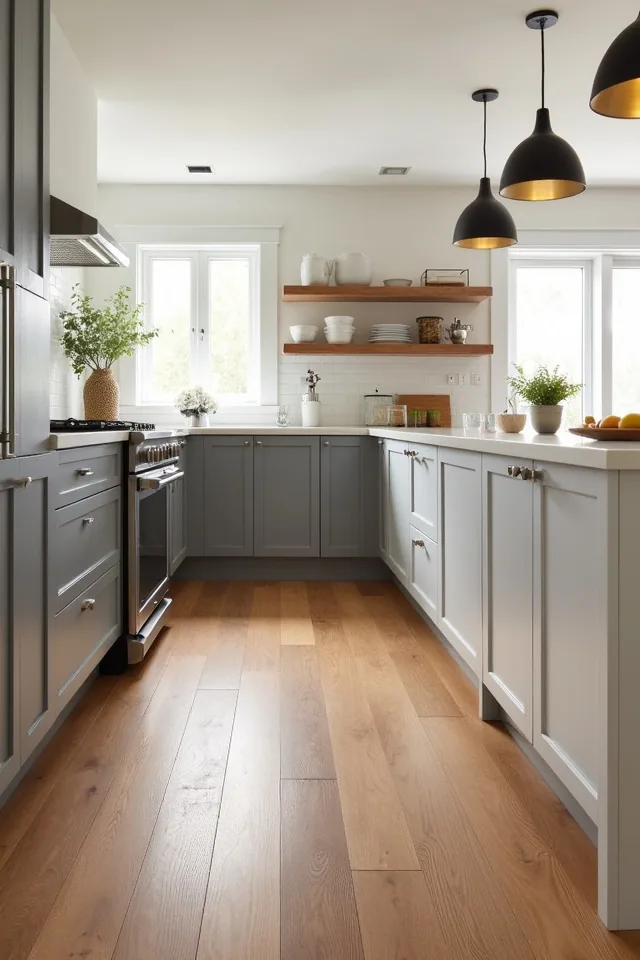
The secret is this: your floor tone dictates which cabinet color goes where. With medium-stain wood floors (think natural oak or hickory), paint upper cabinets white and lower cabinets a soft gray.
- White uppers: SW Pure White or BM Simply White
- Gray lowers: SW Mindful Gray or BM Classic Gray
- Wood floors in natural or honey oak tone
Why this works: the darker lower cabinets ground the space and tie into the floor, while white uppers keep it from feeling heavy. Your wood floors become the middle tone that connects everything.
6. Weathered Gray Wood Island Base with Soft White Walls
Not all wood has to be warm.
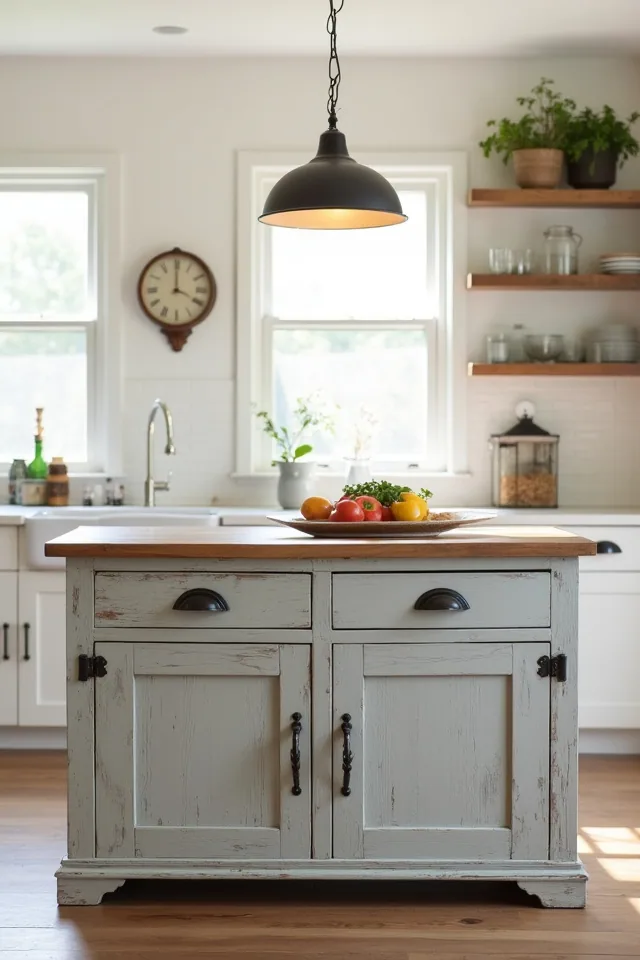
A weathered gray-washed wood island base brings in farmhouse texture without adding warmth — perfect if your kitchen leans more modern farmhouse than rustic. Pair it with BM White Dove walls and a white quartz or marble countertop.
- Look for reclaimed wood with a silvery-gray patina
- Keep hardware simple — matte black pulls or nothing at all
- Add warmth back in with brass pendant lights or a wood cutting board display
This works beautifully in open-concept homes where the kitchen flows into a living room with cooler tones. The gray wood becomes the bridge between spaces.
You May Also Like
7. Dark Walnut Lower Cabinets with White Uppers and Warm Beige Walls
This is the high-contrast farmhouse look — and it's bold.
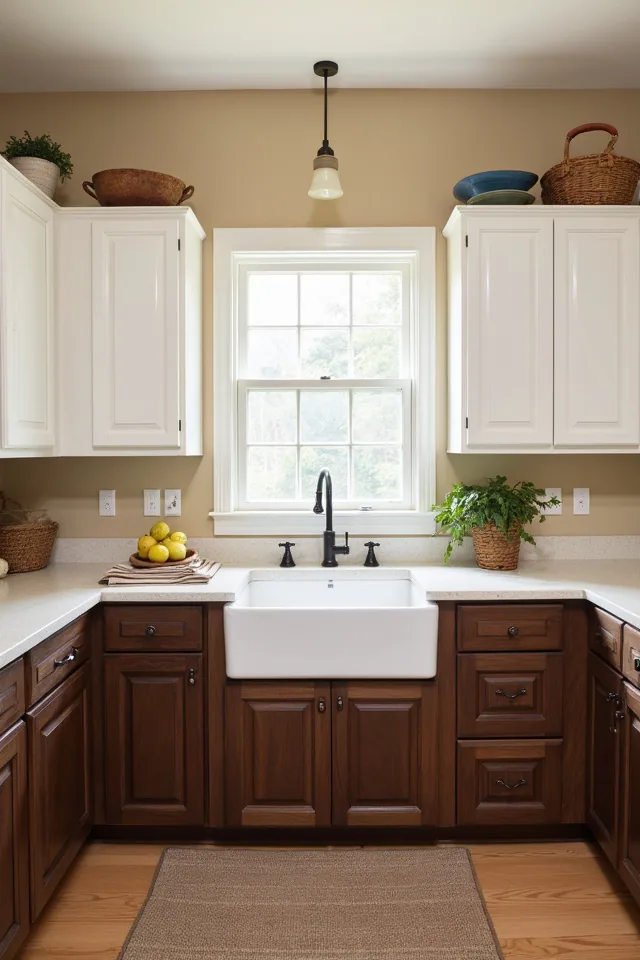
Dark walnut lowers (stained, not painted) paired with crisp white uppers creates drama without losing the farmhouse warmth. The key is the wall color: SW Accessible Beige or SW Balanced Beige keeps it from feeling too stark.
Best For
- Kitchens with lots of natural light
- Spaces that can handle visual weight on the lower half
- Homeowners who want farmhouse with a modern edge
Add a butcher block countertop on the island to tie the dark and light tones together. This look works especially well in larger kitchens where you have room to balance the contrast.
8. Unstained Cedar Plank Accent Wall with SW Alabaster Cabinets
Wood walls aren't just for living rooms.
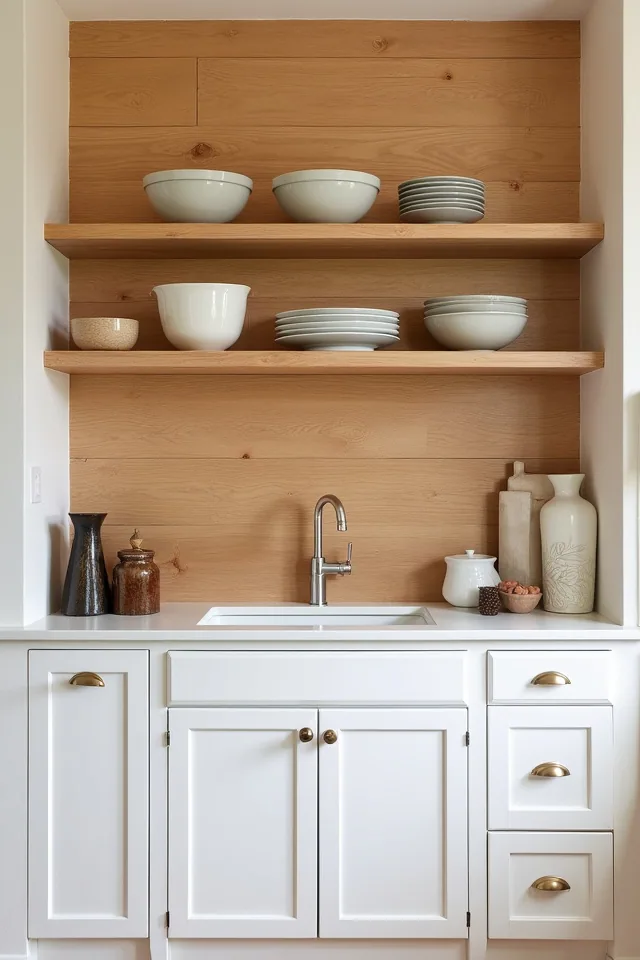
An unstained cedar plank wall behind your range or sink becomes an instant focal point that adds warmth without painting a single cabinet. Cedar has natural reddish undertones that feel warm and rustic — not builder-grade pine.
- Install planks horizontally for a shiplap effect
- Seal with a clear matte finish to preserve the natural color
- Pair with SW Alabaster cabinets — a true warm white
You can find cedar planks on Amazon in the $40-60 range for a small accent wall, and they're easy to install with adhesive backing. The natural wood grain does all the decorating for you.
9. Light Ash Open Shelving with SW Agreeable Gray Walls
Ash wood is the understated hero of farmhouse kitchens.
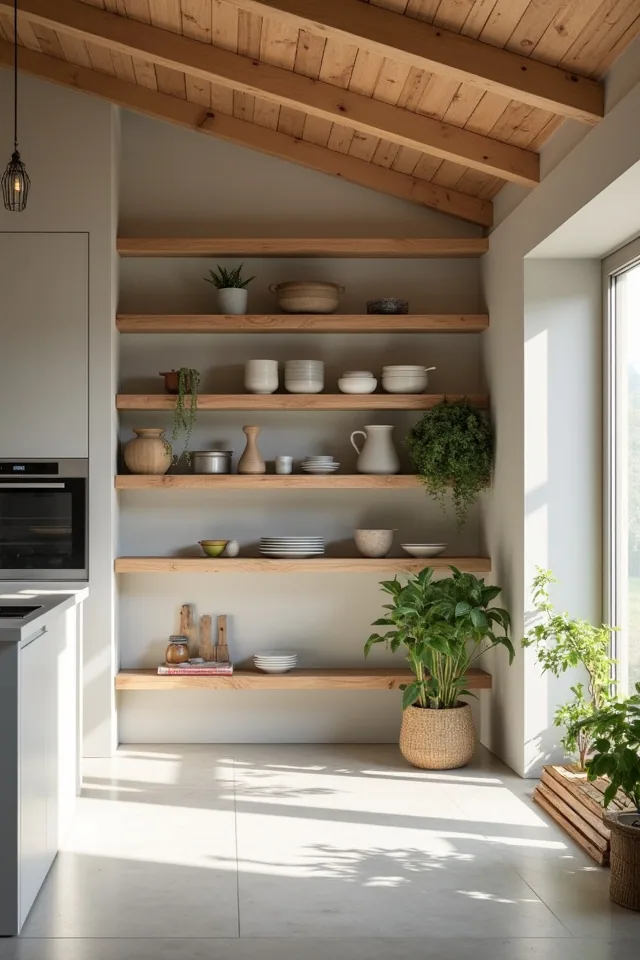
Light ash has a soft, almost blonde tone with subtle grain — it's warm without being yellow, making it the perfect match for cooler neutrals like SW Agreeable Gray. This pairing works in kitchens that want farmhouse warmth but lean minimalist.
- Use ash for floating shelves, not full cabinetry
- Keep styling minimal — white dishes, glass jars, a single plant
- Add black metal brackets for a modern farmhouse touch
SW Agreeable Gray is a greige (gray + beige) that shifts depending on the light. Next to ash wood, it reads soft and neutral, never cold.
10. Honey Pine Floors with White Cabinets and Navy Blue Island
Navy is having a moment — and it pairs beautifully with warm wood.
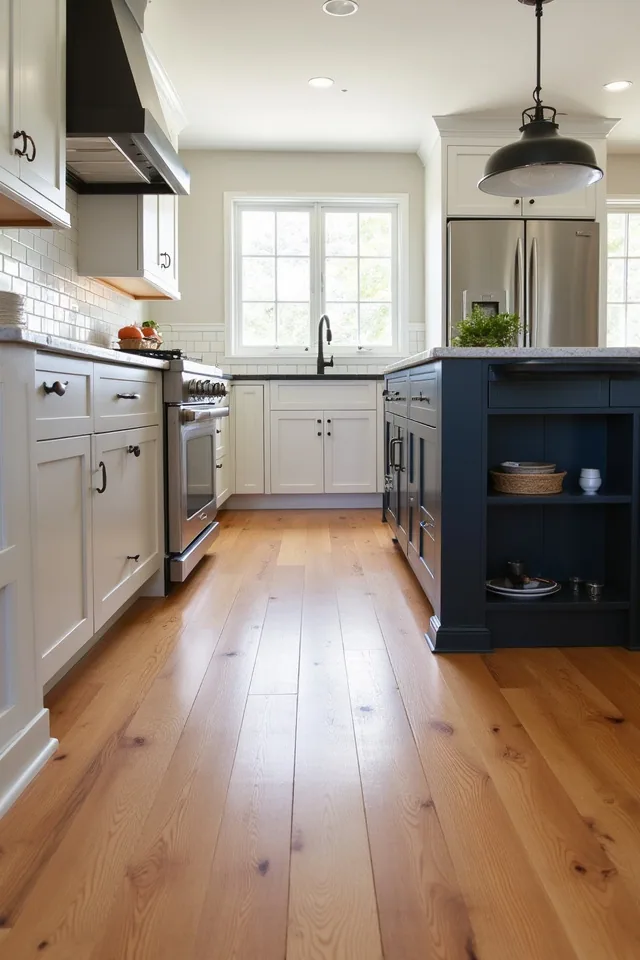
If you have honey pine floors (or any warm-toned wood flooring), a navy blue island adds contrast without clashing. Keep perimeter cabinets white (BM Simply White or SW Pure White) and let the navy be your grounding element.
How to Style It
- Navy island base with butcher block or white quartz top
- Brass or gold hardware to echo the warmth in the floors
- White subway tile backsplash to keep it classic
This combo works especially well in kitchens with lots of natural light. The navy feels rich, not heavy, and the honey floors keep the whole space grounded in warmth.
11. Reclaimed Barn Wood Range Hood with BM White Dove Cabinets
Your range hood doesn't have to be metal or tile.
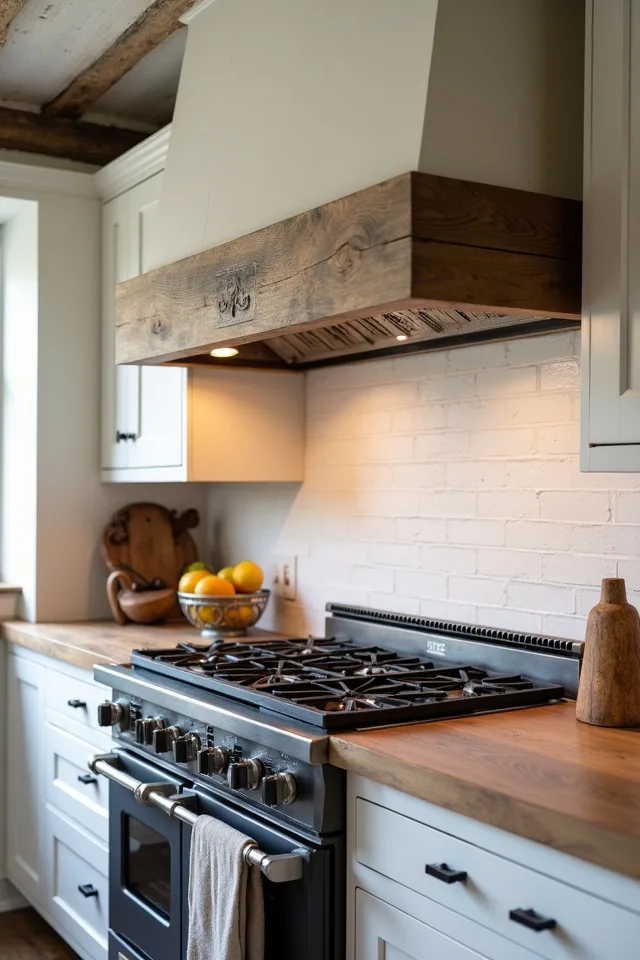
A custom reclaimed barn wood range hood is the single biggest impact piece you can add to a farmhouse kitchen. The weathered texture, the visible nail holes, the gray-brown patina — it's instant character.
- Look for barn wood with a mix of gray and brown tones
- Seal it well — kitchens are humid and greasy
- Pair with BM White Dove cabinets for a soft, cohesive look
You can find reclaimed wood planks on Amazon in bundles for around $50-80, or source locally from a salvage yard. Either way, this piece becomes the room's anchor.
12. Light Oak Cabinets with SW Kilim Beige Walls
Light oak is easier to work with than you think.
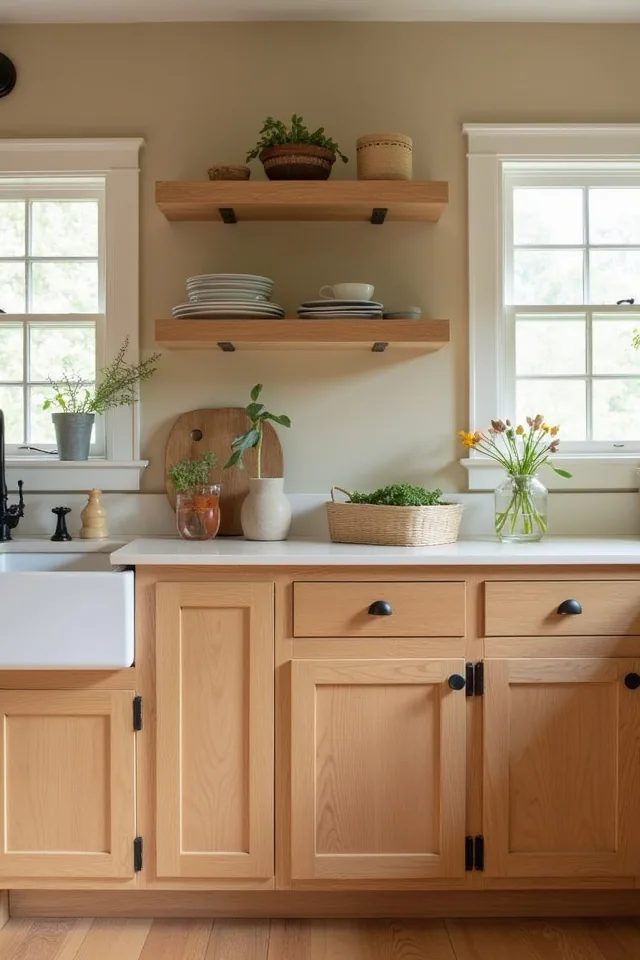
The key is choosing a paint color with enough warmth to match the wood's undertones. SW Kilim Beige is warmer than Accessible Beige and pairs beautifully with light oak — it enhances the golden tones instead of fighting them.
- Keep countertops neutral — white quartz or light granite
- Add black or oil-rubbed bronze hardware
- Use wood cutting boards and bowls as decor to repeat the oak tone
This pairing works especially well in smaller kitchens where dark cabinetry would feel too heavy. The warmth keeps it cozy without closing in the space.
You May Also Like
13. Cherry Wood Floors with White Shaker Cabinets and Soft Gray Walls
Cherry floors have strong red undertones — but they're not impossible to work with.
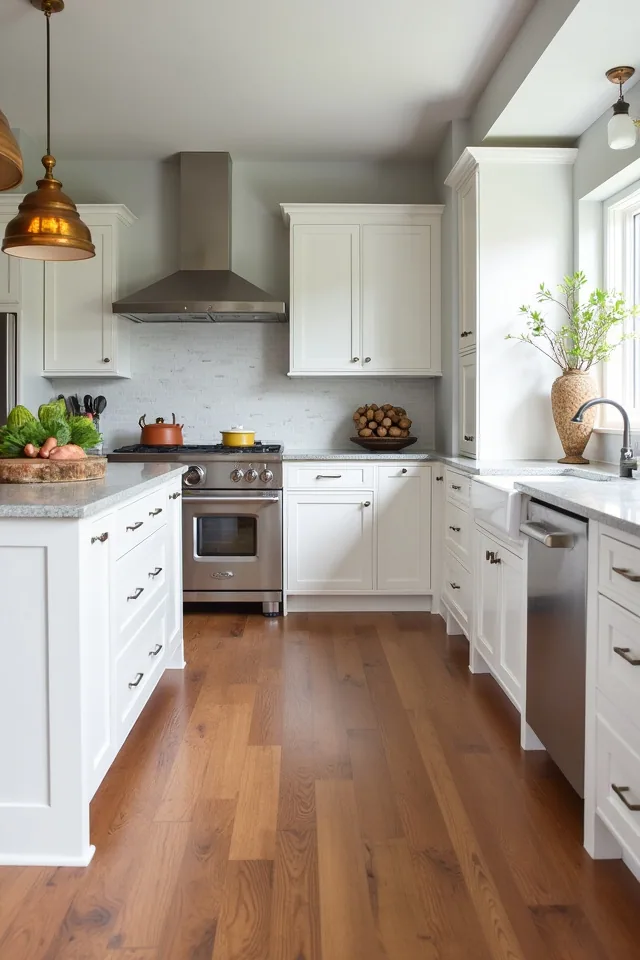
The trick is balancing the warmth with cooler neutrals that calm the red without making it look out of place. White Shaker cabinets (BM Simply White) and SW Repose Gray walls create a soft, neutral backdrop that lets the cherry be the hero.
- Avoid beige or cream walls — they'll amplify the red
- Add black or matte black hardware to ground the space
- Use white or light gray countertops to keep it bright
This pairing works best in kitchens with lots of natural light. The gray walls keep the cherry from overwhelming, and the white cabinets provide visual breathing room.
14. Natural Maple Island with Charcoal Gray Perimeter Cabinets
Maple is light, clean, and underused in farmhouse kitchens.
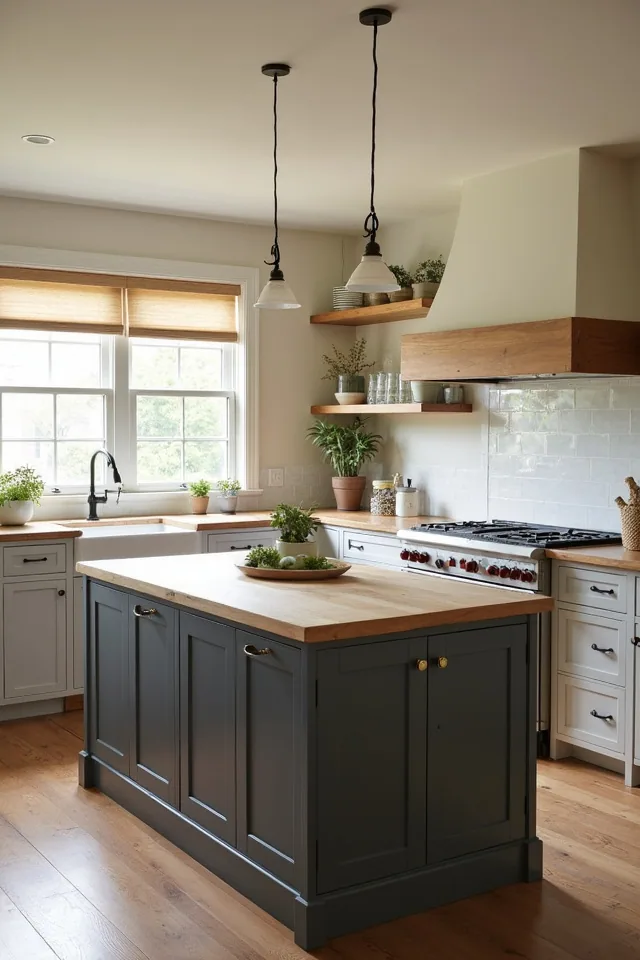
A natural maple island paired with charcoal gray perimeter cabinets creates a modern farmhouse look that feels fresh, not overdone. The light wood brings warmth, while the gray cabinets provide contrast and depth.
Why It Works
- Maple has a subtle grain that doesn't compete with the gray
- The light wood prevents the gray from feeling too heavy
- It's perfect for open-concept spaces with cooler living room tones
Pair with white walls (SW Pure White) and stainless steel appliances. Add brass pendant lights over the island to tie in warmth. This combo works beautifully in newer builds or kitchens with a clean, minimalist vibe.
15. Whitewashed Pine Beams with SW Antique White Walls
Whitewashed wood is farmhouse at its softest.
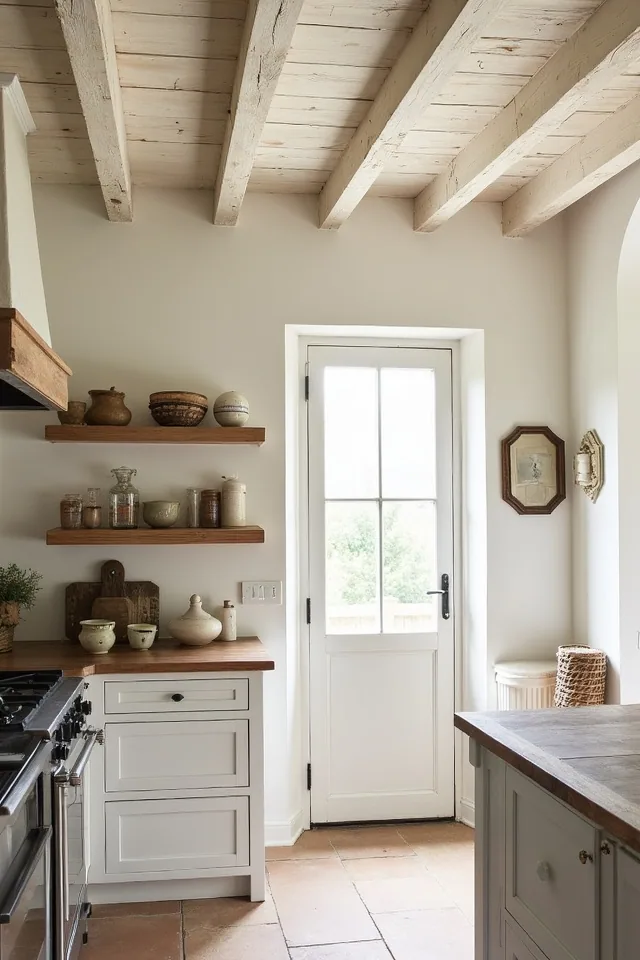
Whitewashed pine ceiling beams bring in texture without adding visual weight — perfect for kitchens where you want the farmhouse look but need to keep things light and airy. SW Antique White on the walls is the ideal match: warm, soft, and just off-white enough to feel intentional.
- Whitewash (not paint) so the wood grain still shows through
- Use the same whitewashed tone for open shelving or a sliding barn door
- Keep cabinetry white or very light gray
This is the softest, most romantic version of farmhouse. It works especially well in kitchens with lots of windows and natural light. The whitewashed wood feels like a cottage in the countryside — no hard edges, just warmth.
Farmhouse kitchens aren't about following a formula. They're about finding the wood tones and paint colors that feel like home to you. Start with one pairing that speaks to you — the floors you already have, the cabinets you're dreaming of, the island you've been pinning for months. The rest will follow.
Save this for later — and explore more at The Woodworking Wonders.