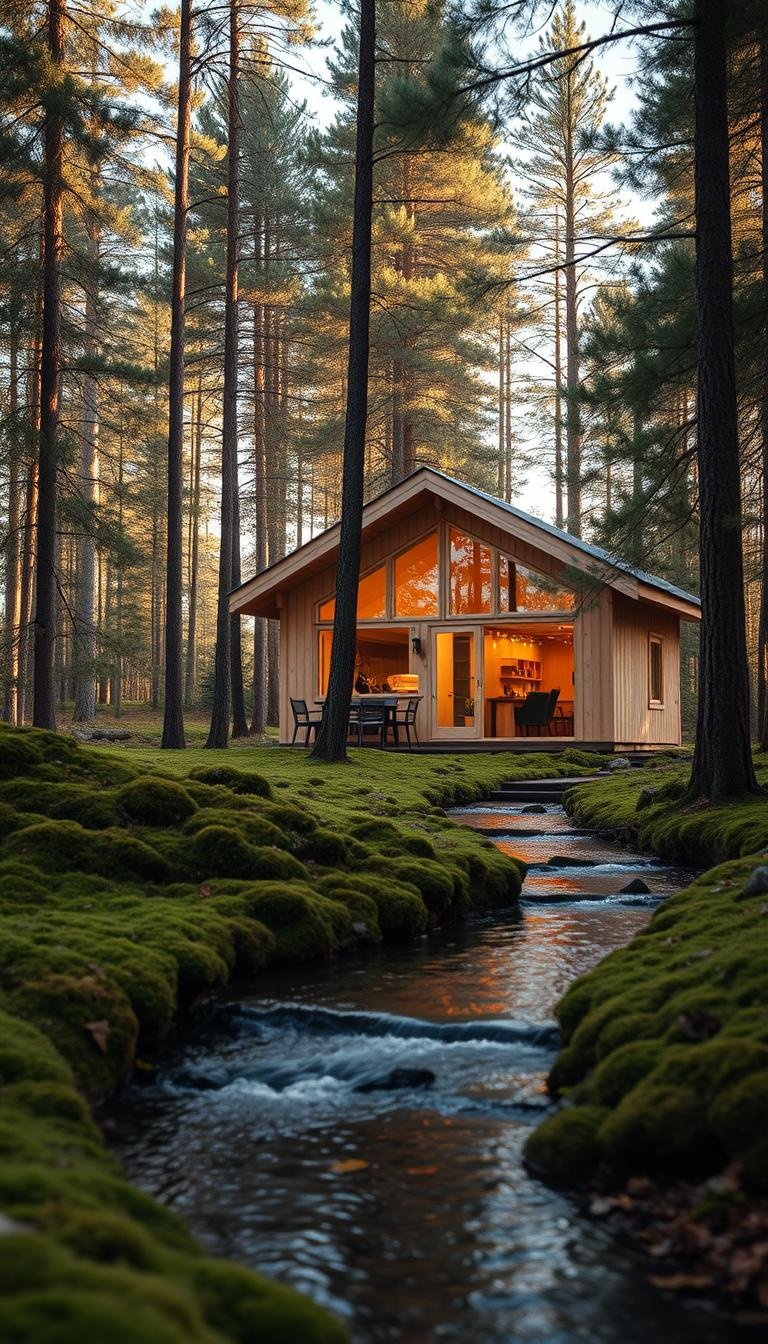
I'm thrilled to share my love for Nordic homes that blend beautifully with nature! These homes are a perfect mix of simple design and caring for the environment. They show how architecture can be both beautiful and eco-friendly.
What I love most is how these homes seem to grow from the land itself. They use natural materials and colors that don't fight against nature's beauty. Their clean lines add to their charm without overpowering the surroundings.
These designs follow the Nordic idea of "lagom" - finding the perfect balance. They are both useful and respectful of their environment. This makes them truly special.
I'm excited to show you what makes these homes so appealing! From weathered wood that gets more beautiful with time to living roofs that join the ecosystem, nordic architecture is full of great ideas. It helps create spaces that feel like they've always been there.
Key Takeaways
- Modern Nordic homes seamlessly integrate with their natural surroundings through organic design principles
- Natural materials like weathered wood and stone create authentic connections to the landscape
- The "lagom" philosophy emphasizes perfect balance between functionality and environmental respect
- Earth-tone color palettes help structures blend with nature
- Living roofs and green elements make buildings part of the local ecosystem
- Clean, minimalist lines prevent architectural elements from overwhelming natural beauty
Natural Wood Siding That Weathers Into the Landscape
I'm fascinated by natural wood siding turning modern Scandinavian cabins into part of the forest. It's magical to see these natural materials gain their own character over time. The wood becomes a natural part of the landscape as it ages.
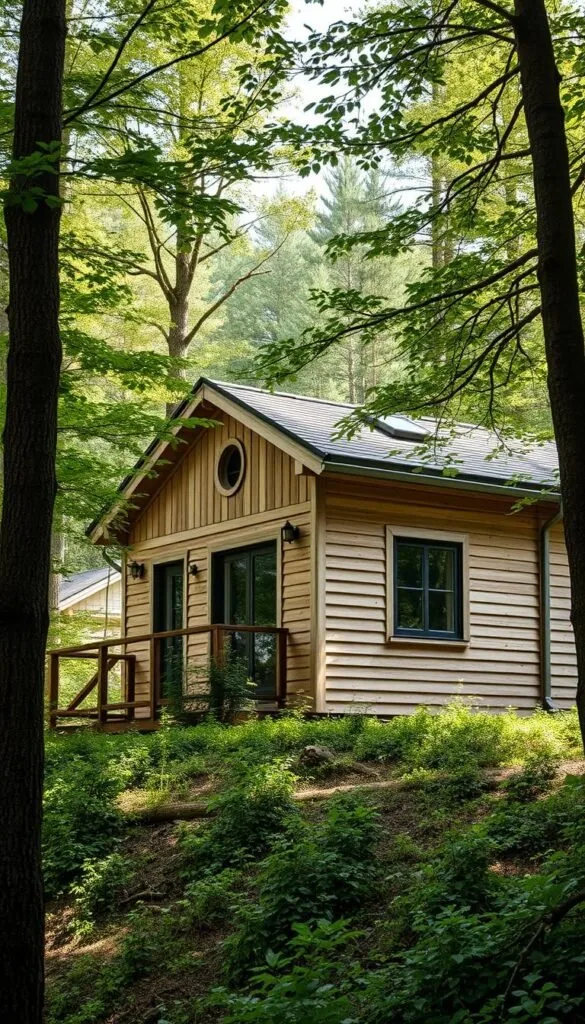
This weathering process creates a real connection between your home and nature. I love how the siding starts off golden, then turns to silver-gray tones. These tones mirror the forest floor and tree bark beautifully.
Cedar and Pine Cladding for Authentic Nordic Appeal
Cedar is my top pick for Scandinavian cabin exteriors. It's durable and naturally resists insects and rot. The wood's oils protect it from the elements without chemicals.
Pine adds that Nordic charm with stunning grain patterns. These patterns become more visible as the wood ages. Both species embrace the beauty of natural materials over time.
Untreated Wood That Develops Natural Patina
I always suggest untreated wood for wood siding projects. The aging process creates a beautiful patina that no stain or paint can match. This weathered look makes your cabin blend with rocky outcroppings and mature trees.
Vertical Board and Batten vs Horizontal Lap Siding
The choice between vertical and horizontal siding affects your cabin's look and function. Here's a comparison:
| Siding Style | Visual Effect | Water Management | Best Applications |
|---|---|---|---|
| Vertical Board and Batten | Creates dramatic height and modern lines | Excellent water shedding naturally | Contemporary cabins, accent walls |
| Horizontal Lap Siding | Classic cabin feel, makes structures appear wider | Requires careful installation for drainage | Traditional designs, main exterior walls |
| Mixed Application | Dynamic visual interest and texture | Combines benefits of both styles | Feature walls, architectural accents |
Stone and Rock Integration for Seamless Ground Connection
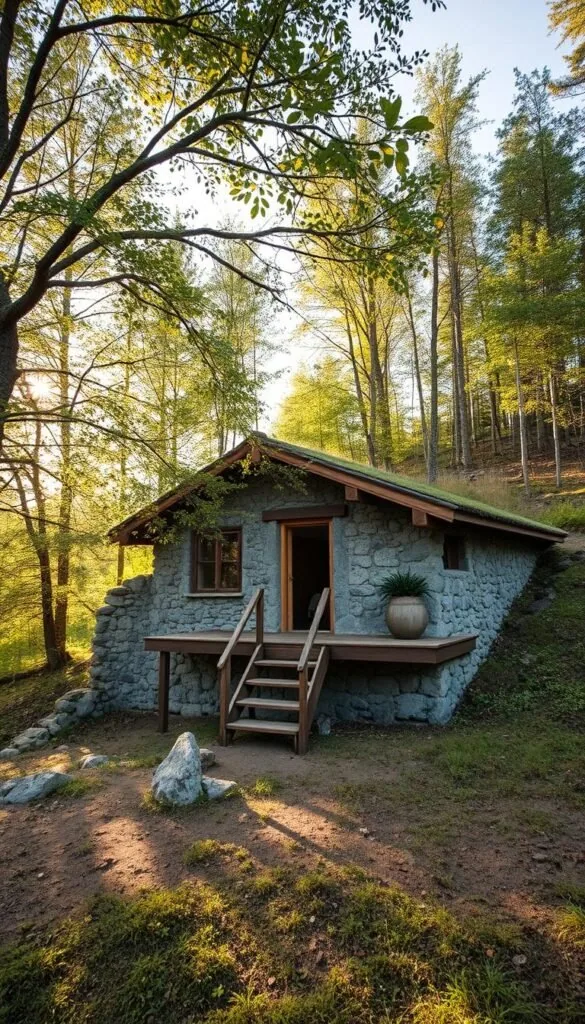
Making a Scandinavian cabin feel like it's part of the landscape is all about stone integration. I'm passionate about how these natural elements connect your cabin to the earth. Using materials that have been around for centuries makes your structure grow from the ground up.
Local Fieldstone Foundation Elements
I always suggest using local fieldstone for stone foundation work. It blends perfectly with your area's geology. Whether it's granite, limestone, or river rock, these materials tell your land's story.
Fieldstone foundations are not just pretty. They also help control temperature naturally. Your cabin will stay cool in summer and warm in winter!
Natural Rock Accent Walls and Chimney Design
Natural rock accent walls bring texture and a true Nordic feel to your cabin design. I love seeing how designers use stone chimneys as focal points. They tie the whole structure to its setting.
These elements create cozy spots around your cabin. The stone absorbs heat during the day and releases it at night. This makes outdoor spaces perfect for evening gatherings.
Stone Pathways That Flow with Terrain
Stone pathways that follow the terrain are genius! They curve like deer paths, respecting the land's natural flow. This approach blends built and natural environments seamlessly.
| Stone Type | Best Application | Durability | Aesthetic Appeal |
|---|---|---|---|
| Fieldstone | Foundations | Excellent | Rustic charm |
| River Rock | Pathways | Good | Smooth texture |
| Granite | Accent walls | Superior | Bold presence |
| Limestone | Chimneys | Very good | Classic elegance |
Earth-Tone Color Schemes That Mirror Natural Surroundings
I'm always amazed by how earth tones can make a cabin blend into the woods. These colors create stunning harmony that changes with the seasons. The secret is to pick hues that match your surroundings.
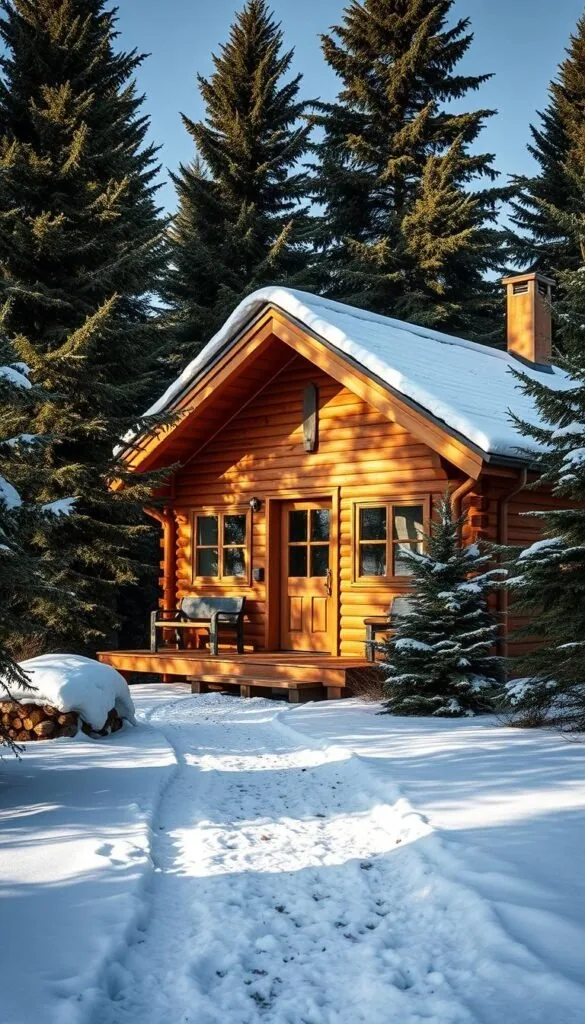
Earth-tone exteriors are timeless. They don't clash with nature's beauty. Instead, they enhance it with their sophisticated look.
Forest Green and Rich Brown Combinations
These colors remind me of pine forests and tree bark. Forest green siding with rich brown trim makes exteriors feel like they're part of the woods. The colors change beautifully as the day goes on.
Charcoal Black and Natural Wood Contrasts
This Nordic palette stands out while staying connected to nature. The deep black contrasts well with weathered wood. It's like mirroring charred tree trunks and dark skies, showing true minimalist design.
Sage Green and Stone Gray Palettes
For a softer look, try these gentle hues. They remind me of lichen-covered rocks and Nordic plants. Sage green walls with stone gray accents bring a calming feel. This palette grows more beautiful over time.
Expansive Windows That Frame Nature Views
I'm fascinated by large windows in modern Scandinavian cabins. They turn these homes into transparent sanctuaries that celebrate nature. These glass features change with each season, connecting cozy interiors with stunning landscapes.
These windows let in lots of natural light during long Nordic winters. They also make small cabins feel big and airy. Scandinavian design focuses on blending shelter with nature.
Floor-to-Ceiling Glass Walls Facing Forests and Lakes
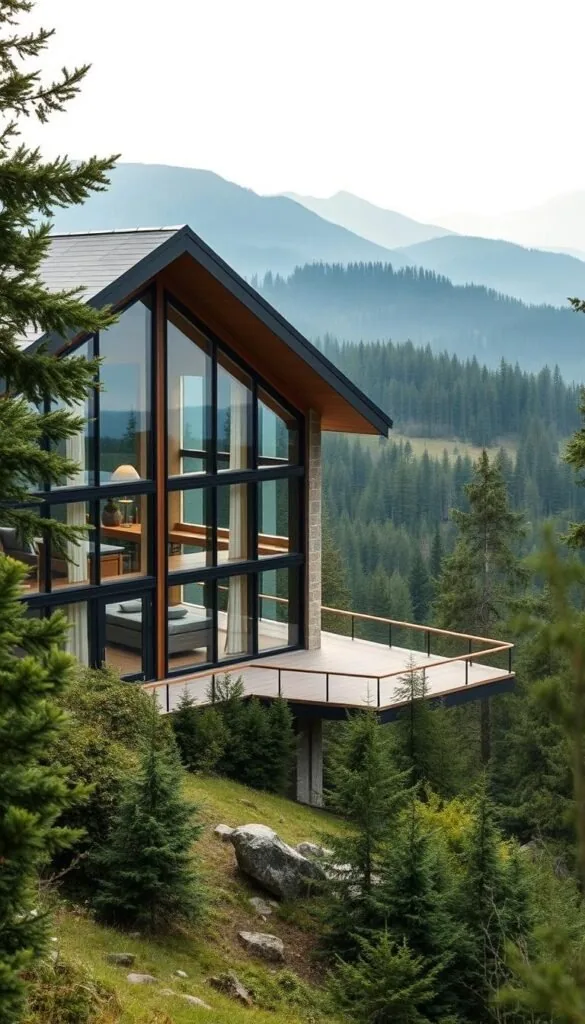
Floor-to-ceiling glass walls make a big impact in Nordic cabins. These large windows turn walls into transparent portals to nature. They offer clear views of forests, lakes, and mountains.
Choosing the right spot for these windows is key. They should face north or east for soft, consistent light. They also need good insulation and glazing for energy efficiency.
Black Metal Window Frames for Contemporary Edge
Black metal window frames add a modern touch to Scandinavian design. These dark frames contrast beautifully with wood and stone. They blend in with forests, making views the main attraction.
I love how these frames mix old and new. They keep the Nordic design feel while adding sleek details. This mix creates timeless beauty that won't go out of style.
Corner Windows That Wrap Around Natural Vistas
Corner windows offer breathtaking panoramic views. They make you feel like you're in the treetops or floating on a lake. They give you views from all angles in one room.
Creating these large windows needs expert installation and support. But the stunning effect is worth it. These features are the heart of Scandinavian design, making unforgettable spaces.
| Window Type | Best Orientation | Key Benefits | Design Considerations |
|---|---|---|---|
| Floor-to-Ceiling Glass | North/East Facing | Maximum natural light and views | High-performance glazing required |
| Black Metal Frames | Any Direction | Contemporary contrast and durability | Regular maintenance for longevity |
| Corner Wrap Windows | Multiple Exposures | Panoramic vistas and spatial flow | Structural engineering expertise needed |
| Traditional Casement | South/West Facing | Ventilation and classic appeal | Weather sealing and insulation |
Living Roofs That Become Part of the Ecosystem
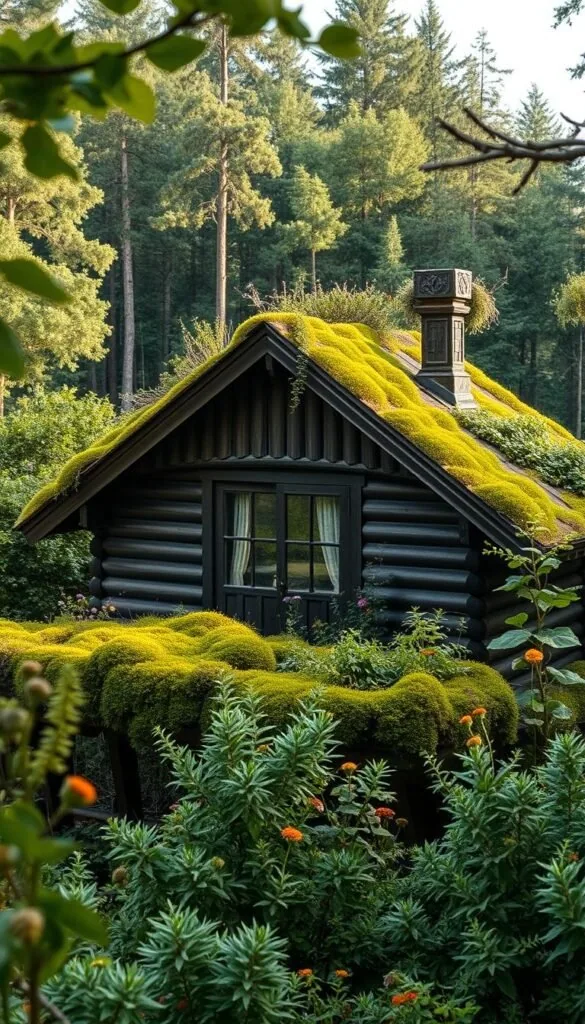
I'm captivated by green roof systems turning cabins into living landscapes. These systems are the top of nordic architecture. They make buildings blend into nature and create homes for wildlife. I love seeing these roofs change with the seasons, blooming in spring and keeping warm all year!
Traditional Scandinavian Sod Roof Construction
The art of sod roof building is amazing for its simplicity. It uses birch bark as a waterproof layer, then sod and grasses for incredible insulation with little upkeep. These methods have kept Nordic homes warm for ages!
The beauty is in the natural materials working together. Birch bark keeps water out while letting the roof breathe. This creates a perfect spot for grass roots to grow and thrive.
Modern Extensive Green Roof Systems
Today's green roof technology elevates traditional ideas with new materials and drainage systems. These systems support many plants, offer excellent thermal performance, and manage stormwater.
I'm impressed by how these systems tackle many challenges at once. They provide insulation, create wildlife habitats, and blend into the landscape.
Native Grasses and Wildflower Installations
This is where the magic really happens! Imagine your cabin roof filled with native wildflowers like those in nearby meadows. These installations connect ecosystems and need little upkeep once they're set up.
| Roof Type | Installation Cost | Maintenance Level | Lifespan | Wildlife Value |
|---|---|---|---|---|
| Traditional Sod | Moderate | Low | 50+ years | High |
| Extensive Green | Higher | Minimal | 40+ years | Very High |
| Wildflower Mix | Moderate | Seasonal | 30+ years | Exceptional |
These roofs often last longer than regular roofs. This makes them environmentally sustainable and cost-effective for cabin owners in the long run.
Clean Architectural Lines That Don't Overpower the Setting
Scandinavian cabin exteriors are known for their simple design. This simplicity lets nature shine. It's amazing how these cabins make a big impact by being less, not more.
This design makes the cabins look both modern and timeless. They grow old gracefully, staying beautiful through the years.
Simple Geometric Forms and Uncluttered Silhouettes
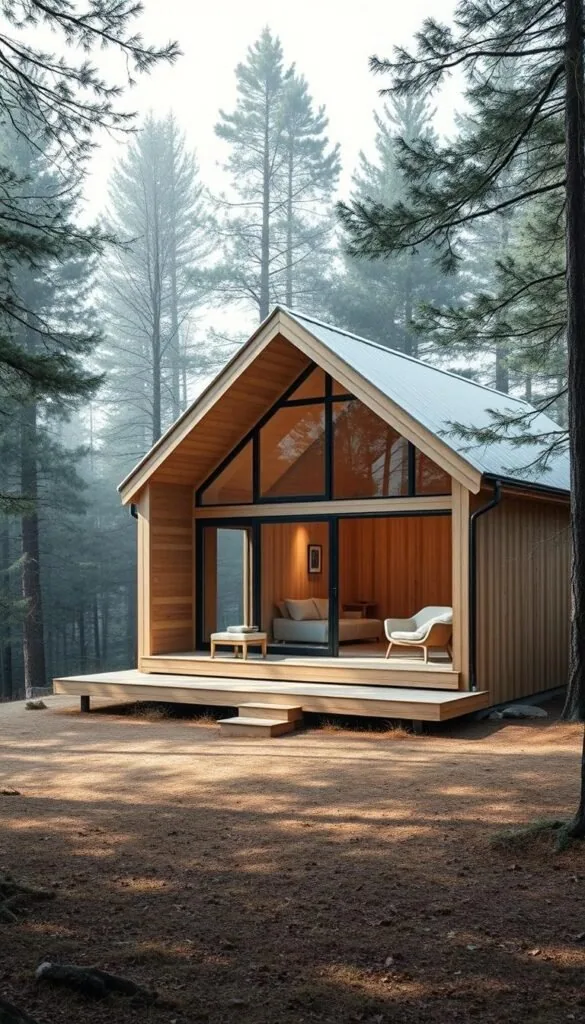
Simple shapes like rectangles and triangles are powerful in cabin design. They create clean lines that don't clash with nature. The clean shapes let your eye move smoothly from the cabin to the landscape.
These shapes also help snow fall off easily. They make the inside of the cabin look amazing, too!
Gabled Roofs That Echo Mountain Peaks
The steep roofs of these cabins talk to the mountains. The clean lines of the roofs match the rugged Nordic landscapes. The sharp angles handle snow well and make the inside feel both snug and spacious.
Minimal Ornamentation for Timeless Appeal
These cabins don't need fancy trim to look good. Their beauty comes from their simple shape and quality materials. This simplicity makes the design strong and stylish for years.
Elevated Foundations That Preserve Natural Ground
Elevated foundations are a smart way to build homes that don't harm nature. This environmental design keeps buildings and nature in harmony. It's amazing how these foundations lift homes up, leaving the forest floor untouched!
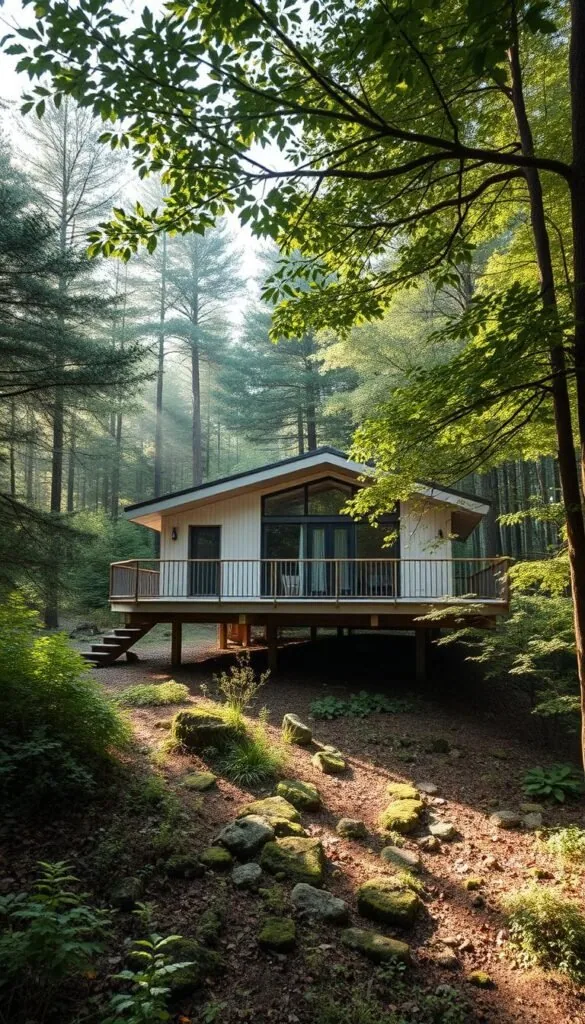
Seeing a cabin above the ground shows the beauty of careful planning. The ground stays untouched, helping the forest stay healthy.
Steel Pier and Concrete Pillar Systems
Steel pier systems are truly impressive. They support buildings with a sleek, modern look. They also don't harm the ground too much.
Concrete pillars are another great choice. They're strong and flexible, fitting well on sloping land. This means you can place your cabin almost anywhere without a lot of work.
Maintaining Natural Drainage Patterns
Elevated cabins are great because they let water flow naturally. Rainwater moves as it should, without causing problems.
This design stops erosion and keeps the right amount of moisture for plants. Your cabin works with nature, not against it. It's a smart way to design that helps the environment.
Creating Wildlife Corridors Beneath Structures
Deer, foxes, and small animals can keep using their paths under your cabin. This is environmental design at its best. It lets wildlife move freely.
The space under your cabin is a safe place for animals. Small ones find shelter, and big ones can keep finding food and homes. Your cabin becomes a part of nature, not a problem.
Scandinavian Cabin Exterior Materials That Develop Character Over Time
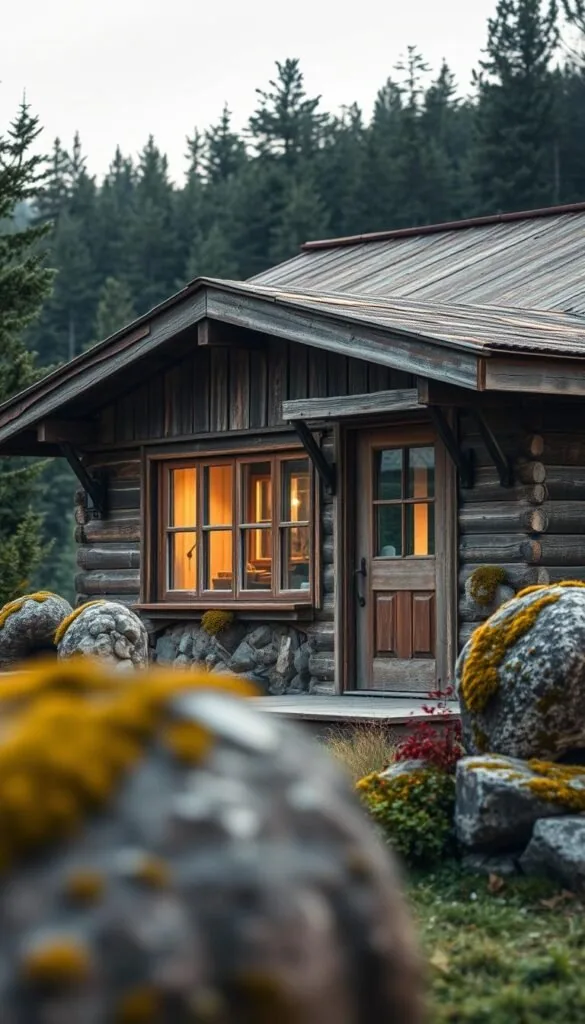
I'm really into how Nordic cabin builders pick weathering materials that get more beautiful over years. They let nature do its thing instead of trying to stop it. These materials look even better as they age and get their own natural patina.
The Scandinavian way is all about being real. They use materials that show how they're affected by their surroundings. Each cabin gets its own look based on how it's exposed and the local weather.
Weathering Steel Cladding and Trim Details
Weathering steel is a top pick for modern Scandinavian cabins. It starts as regular steel but gets a protective rust layer over time. This turns it into a beautiful orange and brown color, like autumn leaves and forest soil.
What's amazing about weathering steel is its natural patina stops it from rusting more. It becomes self-protective and looks great. Plus, it needs no upkeep and gets its own unique patterns.
Natural Copper Roofing and Gutters
Copper roofing changes a lot as it ages, going from shiny to a beautiful blue-green patina. This takes a few years but is a stunning feature of Nordic architecture. The patina also protects the metal, making copper last a long time.
I love how copper gutters and downspouts match the roofing. They get the same beautiful patina and handle harsh weather well.
Fiber Cement Siding in Natural Textures
Fiber cement siding is a modern choice that's both durable and looks like wood or stone. It's weather-resistant and ages well without needing much upkeep. It's a great option for those who want something that looks natural but lasts longer.
What I find most exciting about fiber cement is how it changes subtly over time. It weathers naturally but stays strong for decades.
| Material Type | Initial Appearance | Aged Patina | Maintenance Level |
|---|---|---|---|
| Weathering Steel | Gray metallic | Rich rust orange-brown | None required |
| Natural Copper | Bright copper shine | Blue-green verdigris | Minimal cleaning |
| Fiber Cement | Uniform texture | Subtle weathering | Occasional washing |
Outdoor Living Spaces That Extend Into the Forest
I'm really excited about how well-designed outdoor living areas can make your cabin feel like it's part of the wilderness! These areas are the heart of Scandinavian cabin life. They blend indoor comfort with the beauty of the forest perfectly.
Creating outdoor spaces that feel both safe and wild is key. These aren't just decks or porches – they're special extensions that respect the natural world. They also offer cozy spots for family and friends to gather.
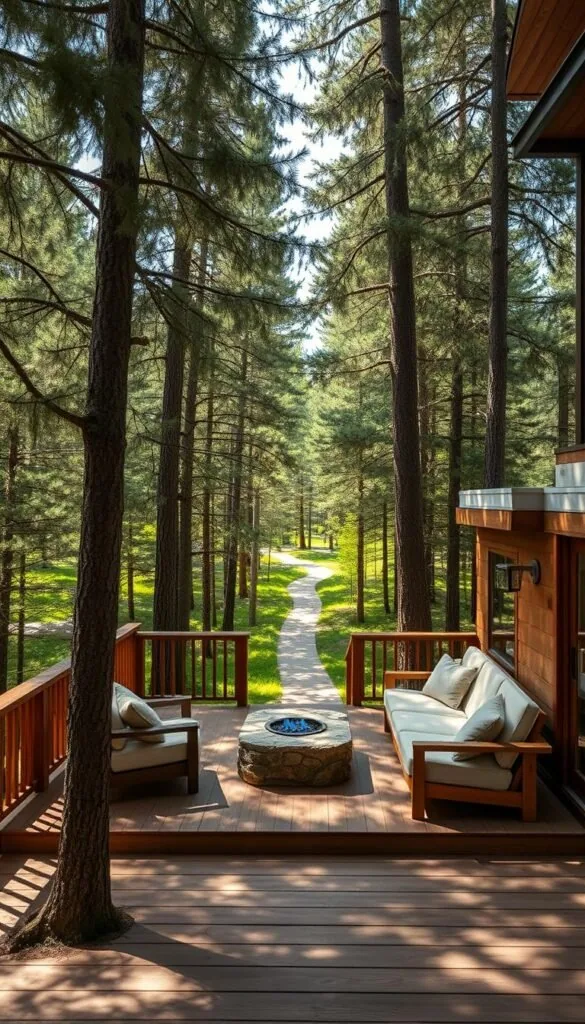
Cantilevered Decks Over Natural Slopes
Cantilevered deck design is amazing because it makes the deck look like it's floating among the trees! These structures go over natural slopes without harming the ground below.
The beauty of cantilevered decks is their low impact on the environment. You're literally suspended in the forest canopy, giving you great views for wildlife watching and seeing the seasons change. Building these decks needs careful planning and engineering, but the result is magical.
I love how these decks offer views from tree level. They also help keep the natural flow of water and paths for wildlife under your cabin.
Screened Porches for Three-Season Enjoyment
Screened porches are a great idea for enjoying more of the outdoors! They keep bugs and bad weather out while letting in fresh air and forest sounds.
These areas let you enjoy things like morning coffee with birdsong or evening chats in the autumn. The screening becomes invisible, making you feel like you're right in nature without the bugs!
It's smart to place screened areas where they catch the breeze and show off the best views of the forest.
Built-in Seating Using Natural Materials
Built-in seating is a beautiful part of your cabin's design! Imagine benches made from the same wood as your siding, or stone walls that match your foundation.
These features blend with the landscape, not just adding furniture. Natural material integration means your seating will age well with your cabin, gaining character over time.
| Outdoor Space Type | Best Season Use | Key Materials | Forest Integration Level |
|---|---|---|---|
| Cantilevered Deck | Spring through Fall | Steel beams, cedar decking | High - floats in canopy |
| Screened Porch | Three seasons | Natural wood frames, fine mesh | Medium - filtered connection |
| Built-in Seating | Year-round | Stone, weathered wood | Very high - mimics landscape |
| Open Deck | Summer focused | Composite or natural wood | Medium - elevated platform |
Native Landscaping That Blurs Indoor-Outdoor Boundaries
I'm really into native landscaping making cabin exteriors blend with the forest. It turns your Scandinavian cabin into a natural part of the environment. Using plants native to your area makes your home look like it's always been there.
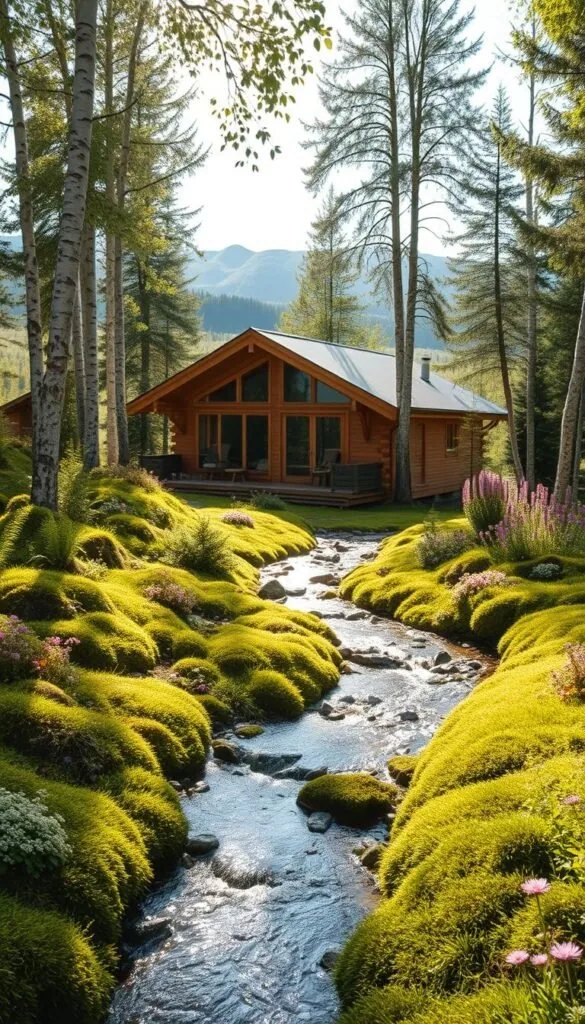
Indigenous Plant Selection for Regional Harmony
Indigenous plants fit perfectly with your local soil and climate. They need little care and help local wildlife. I suggest plants like native ferns and wildflowers for beautiful views all year.
These plants grow well without extra water or food. They fight off pests and diseases, making them incredibly sustainable choices for anyone.
Natural Rain Gardens and Bioswales
Rain gardens handle stormwater and look great! They let water soak into the ground instead of going to storm drains. This helps clean the water and keeps the groundwater healthy.
I love seeing bioswales with plants like sedges and iris. These plants love water and make spectacular seasonal displays that are as good as any garden.
Preserving Mature Trees During Construction
Keeping big trees during construction is key! They add character, help wildlife, and are good for the environment. I'm happy when cabin designs keep these trees instead of cutting them down.
This way, the cabin and forest blend together right away. It keeps the forest's balance.
Subtle Exterior Lighting That Respects Dark Skies
Thinking about exterior lighting for forest cabins excites me. It's a chance to improve both function and mood. The goal is to light up your space without ruining the natural darkness of the woods. Dark sky friendly lighting is good for the environment and makes your cabin look and feel better.
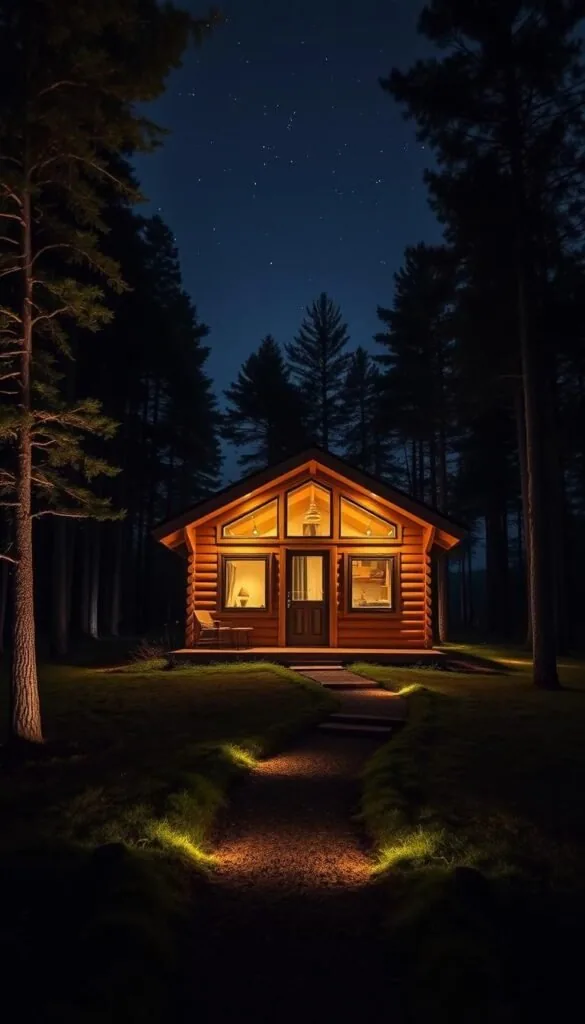
Warm LED Fixtures with Natural Material Housings
Warm LED lights change cabin exteriors beautifully without harming nature. They give off a cozy, amber glow. The key is using housings made from natural materials like copper, weathered steel, or reclaimed wood.
These materials make your lights blend in during the day. At night, they create a warm, welcoming light that feels like home.
Low-Level Path Lighting Using Stone and Wood
Path lighting doesn't need to be bright and harsh. I'm amazed by how stone and wood lighting solutions work. They provide enough light for safety without ruining the forest's feel.
These lights are often built into walls, deck railings, or stone steps. Keeping light levels low and directing it downward protects wildlife and preserves the starry skies.
Architectural Accent Lighting for Safety and Beauty
Strategic exterior lighting highlights your cabin's design. I focus on entryways, steps, and unique features. This approach shows that less is more in dark sky friendly design.
Conclusion
I'm excited to share how Scandinavian design can change your cabin living approach! These exteriors are compelling because they work with nature, not against it. They focus on sustainable design.
Every element we've looked at shows how to blend with nature. From weathered cedar to living roofs, and big windows to raised foundations, it's all about smart choices. These aren't just pretty; they're also good for the planet.
These design principles fit any region while keeping that Nordic feel. Whether you're in the Pacific Northwest or by the Great Lakes, the idea is the same. Respect your landscape and let it guide your design.
Patience is key. Watch untreated wood turn silver. See native plants grow on your roof. Notice how stone paths blend with the land.
Start small with natural materials or native plants around your cabin. Each choice moves you closer to a space that enhances nature, not fights it.
Your cabin should feel like it grew from the forest, not like it was just placed there. That's Scandinavian design at its best. It gets more beautiful with each season.
FAQ
What type of wood siding works best for modern Scandinavian cabin exteriors?
I highly recommend cedar and pine for a true Nordic look. Cedar is durable and fights off insects and rot. Pine has a unique grain that's key to Scandinavian design.
FAQ
What type of wood siding works best for modern Scandinavian cabin exteriors?
I highly recommend cedar and pine for a true Nordic look. Cedar is durable and fights off insects and rot. Pine has a unique grain that's key to Scandinavian design.
How do living roofs actually work on Scandinavian cabins?
FAQ
What type of wood siding works best for modern Scandinavian cabin exteriors?
I highly recommend cedar and pine for a true Nordic look. Cedar is durable and fights off insects and rot. Pine has a unique grain that's key to Scandinavian design.
FAQ
What type of wood siding works best for modern Scandinavian cabin exteriors?
I highly recommend cedar and pine for a true Nordic look. Cedar is durable and fights off insects and rot. Pine has a unique grain that's key to Scandinavian design.
What color schemes work best for blending cabins with natural surroundings?
FAQ
What type of wood siding works best for modern Scandinavian cabin exteriors?
I highly recommend cedar and pine for a true Nordic look. Cedar is durable and fights off insects and rot. Pine has a unique grain that's key to Scandinavian design.
FAQ
What type of wood siding works best for modern Scandinavian cabin exteriors?
I highly recommend cedar and pine for a true Nordic look. Cedar is durable and fights off insects and rot. Pine has a unique grain that's key to Scandinavian design.
How large should windows be in a Scandinavian cabin design?
FAQ
What type of wood siding works best for modern Scandinavian cabin exteriors?
I highly recommend cedar and pine for a true Nordic look. Cedar is durable and fights off insects and rot. Pine has a unique grain that's key to Scandinavian design.
FAQ
What type of wood siding works best for modern Scandinavian cabin exteriors?
I highly recommend cedar and pine for a true Nordic look. Cedar is durable and fights off insects and rot. Pine has a unique grain that's key to Scandinavian design.
Why are elevated foundations important for Scandinavian cabin design?
FAQ
What type of wood siding works best for modern Scandinavian cabin exteriors?
I highly recommend cedar and pine for a true Nordic look. Cedar is durable and fights off insects and rot. Pine has a unique grain that's key to Scandinavian design.
FAQ
What type of wood siding works best for modern Scandinavian cabin exteriors?
I highly recommend cedar and pine for a true Nordic look. Cedar is durable and fights off insects and rot. Pine has a unique grain that's key to Scandinavian design.
What materials develop the best character over time on cabin exteriors?
FAQ
What type of wood siding works best for modern Scandinavian cabin exteriors?
I highly recommend cedar and pine for a true Nordic look. Cedar is durable and fights off insects and rot. Pine has a unique grain that's key to Scandinavian design.
FAQ
What type of wood siding works best for modern Scandinavian cabin exteriors?
I highly recommend cedar and pine for a true Nordic look. Cedar is durable and fights off insects and rot. Pine has a unique grain that's key to Scandinavian design.
How do you integrate stone elements into Scandinavian cabin exteriors?
FAQ
What type of wood siding works best for modern Scandinavian cabin exteriors?
I highly recommend cedar and pine for a true Nordic look. Cedar is durable and fights off insects and rot. Pine has a unique grain that's key to Scandinavian design.
FAQ
What type of wood siding works best for modern Scandinavian cabin exteriors?
I highly recommend cedar and pine for a true Nordic look. Cedar is durable and fights off insects and rot. Pine has a unique grain that's key to Scandinavian design.
What type of outdoor lighting works best for forest cabin settings?
FAQ
What type of wood siding works best for modern Scandinavian cabin exteriors?
I highly recommend cedar and pine for a true Nordic look. Cedar is durable and fights off insects and rot. Pine has a unique grain that's key to Scandinavian design.
FAQ
What type of wood siding works best for modern Scandinavian cabin exteriors?
I highly recommend cedar and pine for a true Nordic look. Cedar is durable and fights off insects and rot. Pine has a unique grain that's key to Scandinavian design.
How do you create seamless outdoor living spaces in forest settings?
FAQ
What type of wood siding works best for modern Scandinavian cabin exteriors?
I highly recommend cedar and pine for a true Nordic look. Cedar is durable and fights off insects and rot. Pine has a unique grain that's key to Scandinavian design.
FAQ
What type of wood siding works best for modern Scandinavian cabin exteriors?
I highly recommend cedar and pine for a true Nordic look. Cedar is durable and fights off insects and rot. Pine has a unique grain that's key to Scandinavian design.
What's the best approach to landscaping around a Scandinavian cabin?
FAQ
What type of wood siding works best for modern Scandinavian cabin exteriors?
I highly recommend cedar and pine for a true Nordic look. Cedar is durable and fights off insects and rot. Pine has a unique grain that's key to Scandinavian design.
FAQ
What type of wood siding works best for modern Scandinavian cabin exteriors?
I highly recommend cedar and pine for a true Nordic look. Cedar is durable and fights off insects and rot. Pine has a unique grain that's key to Scandinavian design.
How do clean architectural lines enhance the natural setting?
FAQ
What type of wood siding works best for modern Scandinavian cabin exteriors?
I highly recommend cedar and pine for a true Nordic look. Cedar is durable and fights off insects and rot. Pine has a unique grain that's key to Scandinavian design.
FAQ
What type of wood siding works best for modern Scandinavian cabin exteriors?
I highly recommend cedar and pine for a true Nordic look. Cedar is durable and fights off insects and rot. Pine has a unique grain that's key to Scandinavian design.
How long does it take for exterior materials to develop their weathered appearance?
FAQ
What type of wood siding works best for modern Scandinavian cabin exteriors?
I highly recommend cedar and pine for a true Nordic look. Cedar is durable and fights off insects and rot. Pine has a unique grain that's key to Scandinavian design.
FAQ
What type of wood siding works best for modern Scandinavian cabin exteriors?
I highly recommend cedar and pine for a true Nordic look. Cedar is durable and fights off insects and rot. Pine has a unique grain that's key to Scandinavian design.