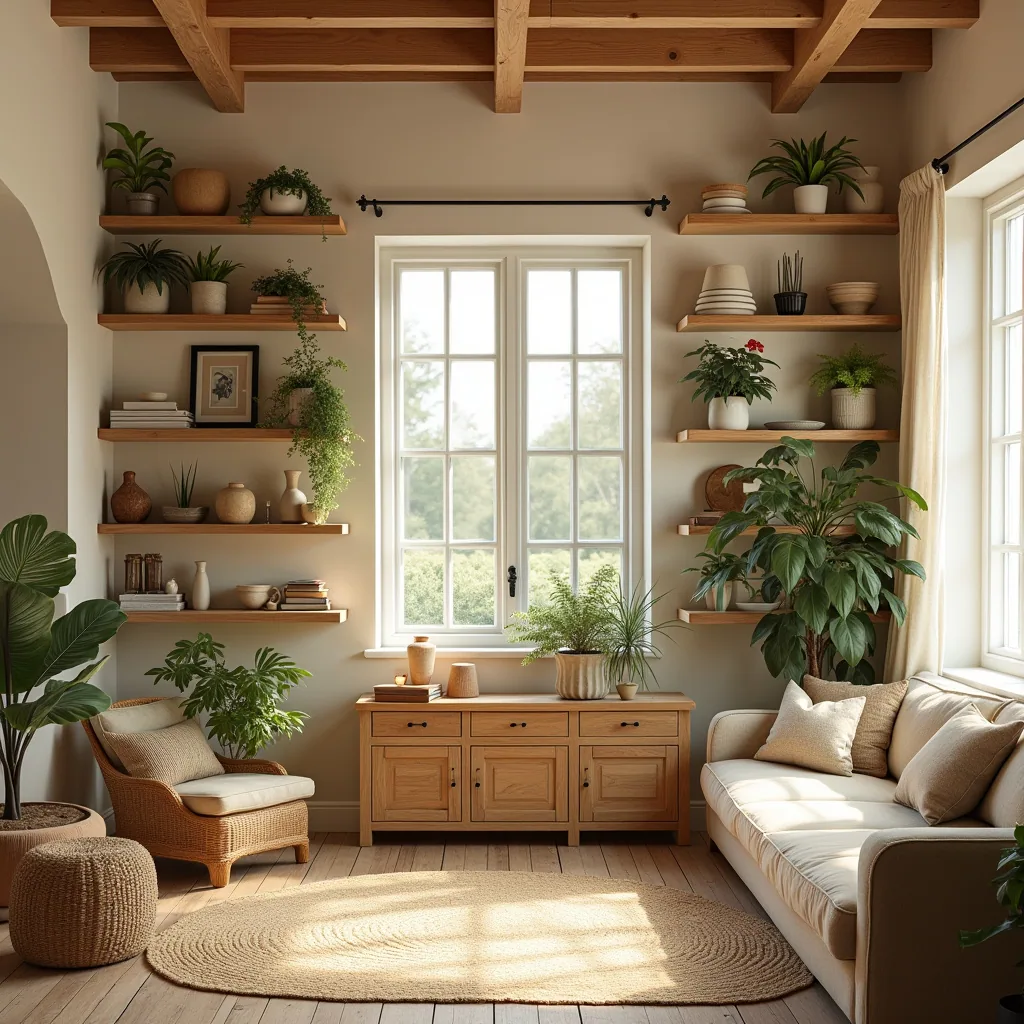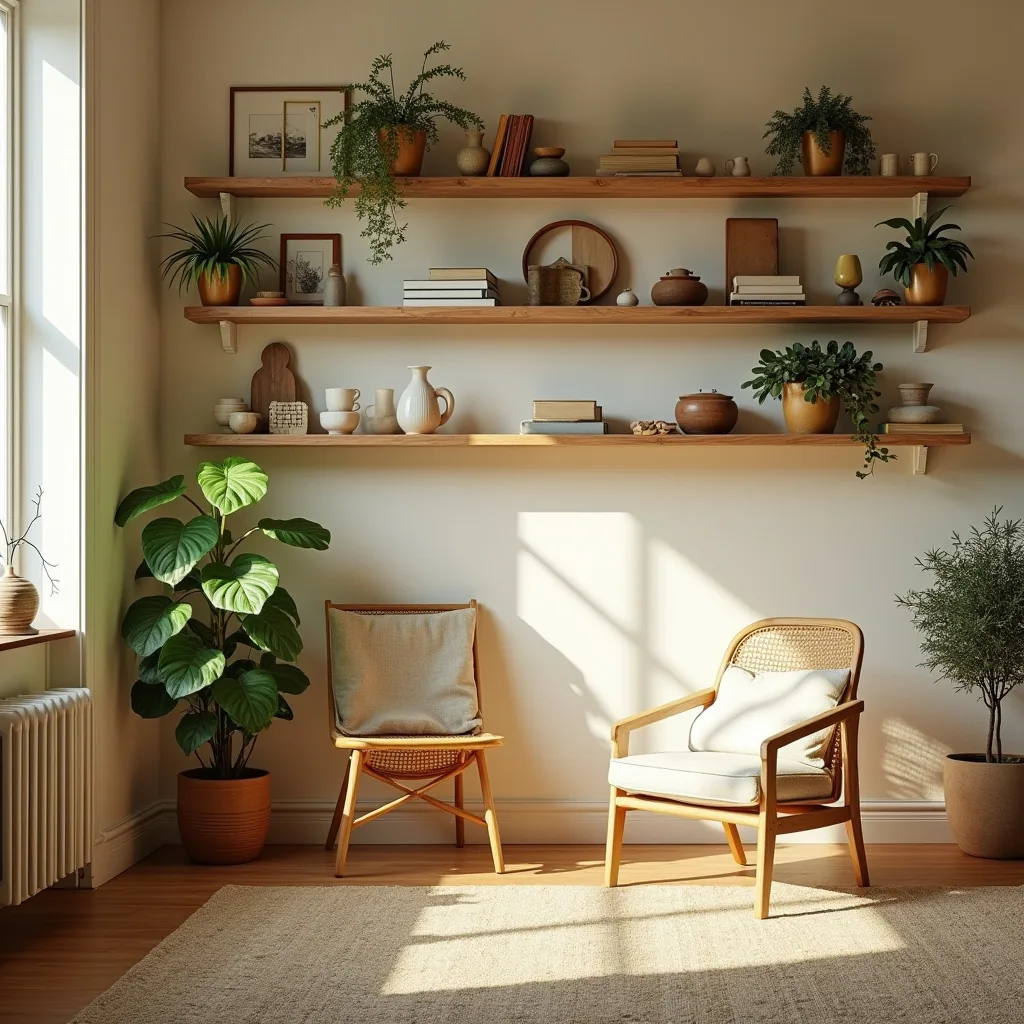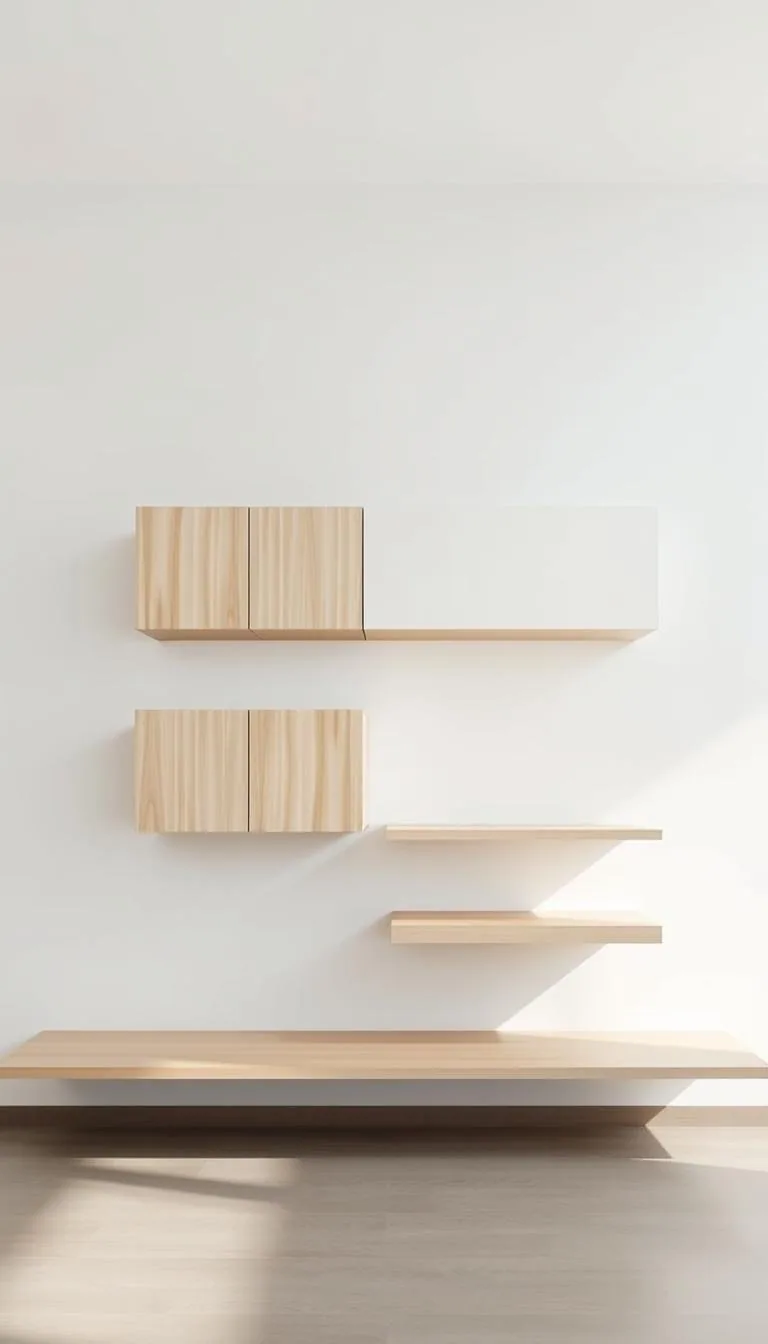
Minimalist floating cabinets are changing homes in the U.S. with their sleek look and space-saving design. They seem to float, making rooms feel larger and more open. These cabinets are great for those who love simple, clean designs. They hide clutter while keeping your space looking neat.
So, why do people love them? Their design is simple yet powerful, fitting many styles. From modern lofts to cozy kitchens, they make a statement. By choosing these cabinets, you're part of a movement that adds beauty without sacrificing function.
Whether you're updating a small apartment or a big living room, these cabinets are a stylish choice. They work hard and look even better.
What Are Minimalist Floating Cabinets?
Minimalist floating cabinets mix modern style with usefulness. They look like they're floating, adding a clean look to any room. They're great for small homes or anyone who likes a simple look, without any mess.
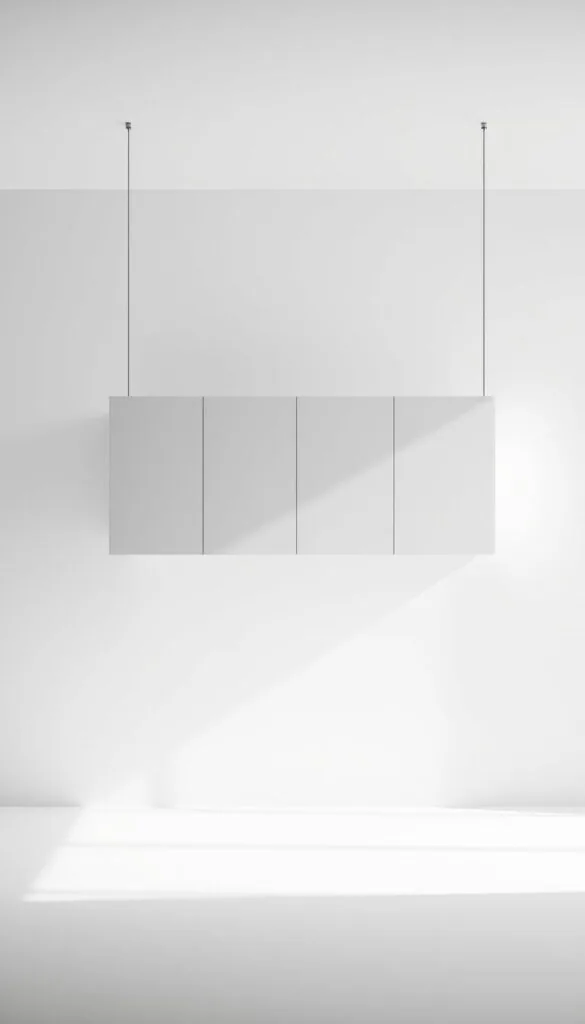
Definition and Design Principles
These cabinets use hidden mounts to seem weightless. Designers use slim brackets or magnets to attach them to walls. They're all about simplicity, with flat surfaces and no visible edges.
Think of them as sleek wall-mounted cabinets that follow the minimalist trend. Brands like IKEA or Muji make them.
Popular Materials Used
- Engineered wood: Durable and cost-effective
- Solid hardwood: Adds warmth and longevity
- Metal: Provides a contemporary industrial look
- Composites: Lightweight and moisture-resistant
Key Features of Floating Cabinets
These cabinets have cool features like hidden hinges and built-in lights. Some even have motorized lifts or soft-close doors. Their slim design makes them perfect for small spaces, like city apartments or modern lofts.
Benefits of Minimalist Floating Cabinets
Minimalist floating cabinets do more than just hold items—they redefine living spaces. These sleek designs blend form and function to address common home organization challenges. Whether you’re short on space or seeking a polished look, they deliver practical upgrades without sacrificing style.
Space-Saving Solutions
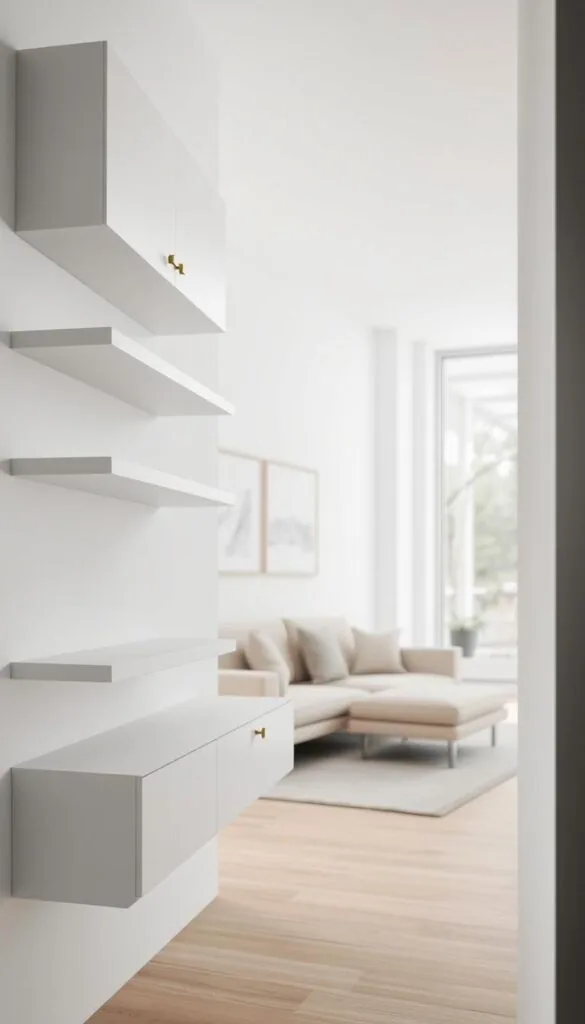
Imagine a room where every inch counts. Floating cabinets free up floors by moving storage to walls, making small spaces feel expansive. Their slim profiles and open bases let light and airflow circulate, creating an illusion of depth.
For example, a kitchen island gains space when spices and utensils are stored above countertops. Minimalist home organization becomes achievable with these smart, vertical solutions.
Enhanced Aesthetics
"Floating storage solutions turn walls into canvases for contemporary design." — ArchDaily
With clean lines and minimalist silhouettes, these cabinets act as subtle focal points. Matte finishes or sleek metal accents harmonize with modern decor while avoiding clutter. Their low profiles and seamless mounts let walls remain the backdrop, not the main act.
Versatile Functionality
- Adjustable heights: Install at desk level for home offices or above beds for nightstand storage
- Modular setups: Combine units in L-shapes or staggered patterns to match room layouts
- Multi-room use: Kitchens gain pot racks; bathrooms store towels; entryways organize keys and mail
From entryways to bedrooms, their adaptability makes them a staple in minimalist home organization strategies. No two setups look alike, proving function and beauty aren’t mutually exclusive.
Choosing the Right Style for Your Home
Start by matching your decor to your home's feel. Whether you prefer bold, modern shelves or classic beauty, the choice is yours. Let's explore how to find the perfect style for you.
Modern vs. Traditional Designs
- Modern: Choose sleek lines and matte finishes. Brands like Muuto or have minimalist shelves with hidden hardware.
- Traditional: Go for carved details or ornate hardware. Restoration Hardware blends classic looks with floating shelves for a balanced look.
Color and Finish Options
Natural wood tones like oak or walnut work well in farmhouse settings. Bold colors like black or white add drama. Matte finishes are subtle, while glossy ones create contrast.
West Elm's collections show how finishes can change a room's feel.
Size Considerations
Measure your walls first. Shelves should be 3–6 inches deep to avoid bulk. Modular systems from brands like Ferm Living let you mix sizes.
For a focal point, use oversized cabinets over 6 feet wide. They grab attention without overwhelming small spaces.
Installation Tips for Floating Cabinets
Installing sleek wall-mounted cabinets or modern wall storage needs careful planning. This ensures stability and safety. First, check your wall type—drywall, concrete, or brick—to pick the right anchors and hardware. Here’s how to do it confidently.
Tools and Materials Needed
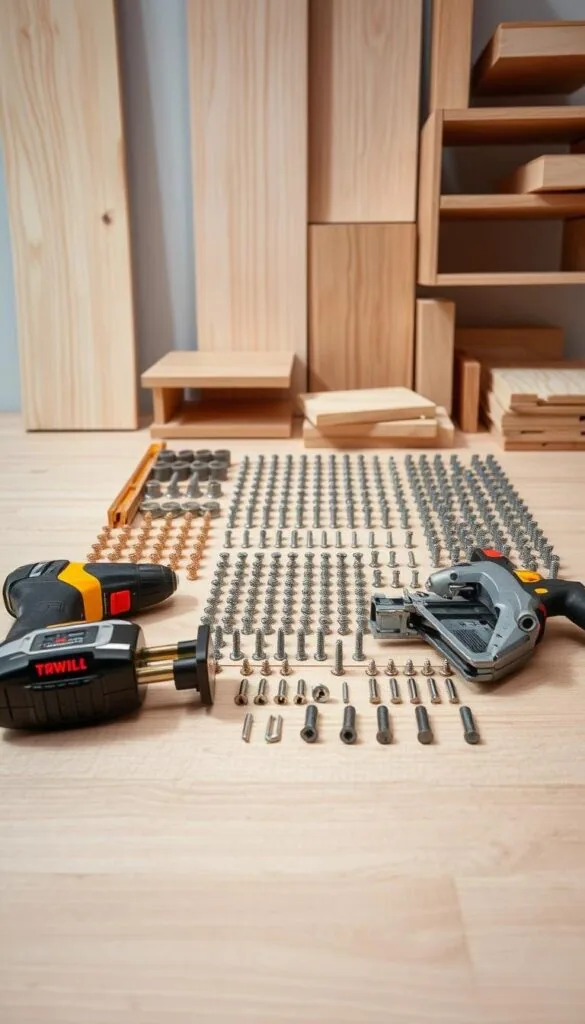
- Stud finder (e.g., DeWalt DTS350) and level
- Drill, screws, and the right anchors (plastic or toggle bolts)
- Measuring tape and pencil
- Mounting brackets and hardware that comes with the cabinets
Step-by-Step Process
- Mark wall spots with a level to keep things straight.
- Find studs for strong support; use anchors where studs aren’t found.
- Drill holes and attach brackets firmly before putting on cabinets.
- Make sure cabinets are aligned well and tighten screws slowly to avoid warping.
Common Mistakes to Avoid
Don’t overload cabinets more than they can handle—check the weight limit. Skipping stud checks can cause sagging, so always check the wall. Misaligned brackets can lead to uneven mounting, so check levels at every step.
“Measure twice, mount once,” says expert installer Sarah Lee. “Precision ensures longevity and safety.”
For tricky surfaces like brick or stone, look at brands like Rockler or The Home Depot for special anchors. If you’re unsure about electrical wiring, get a professional to avoid risks. A well-planned installation can turn any room into a minimalist elegance showcase.
Floating Cabinets in Different Rooms
See how minimalist floating cabinets fit into every room, mixing style with practicality. These floating storage solutions change spaces from the living room to the bathroom, making them unique.
Living Room: Optimizing Space and Style
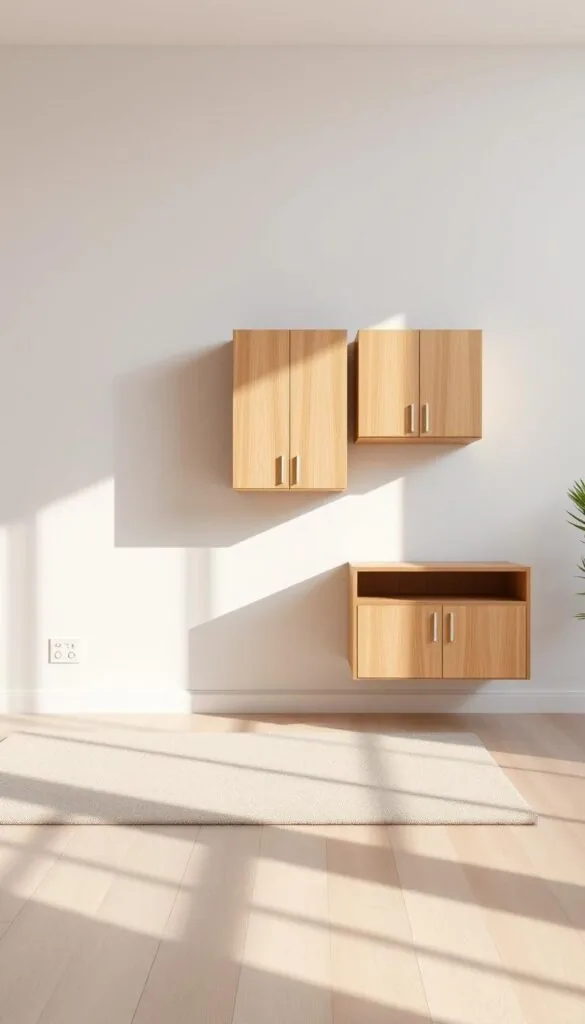
Change your living room with floating storage solutions that also decorate. Place cabinets above fireplaces for art or use open shelves for books and plants. Minimalist floating cabinets clear the floor and show off your taste. Here are some ideas:
- Entertainment units with hidden cable management
- Low-profile designs above sofas for small spaces
- Customizable wall systems for media setups
Kitchen: Practicality Meets Elegance
In kitchens, floating cabinets add space without taking up room. Put upper cabinets near countertops for utensils or spices. Open shelving in light colors makes the area look bigger. Choose durable materials like stainless steel in wet areas.
Bathroom: Organized and Chic Storage
Bathrooms get sleek storage with minimalist floating cabinets that resist moisture. Wall-mounted vanities keep the floor dry, and floating medicine cabinets hide toiletries. A designer suggests:
“Use acrylic finishes in bathrooms—they resist water and add brightness.”
Use waterproof adhesives for a secure hold.
Maintaining Your Floating Cabinets
Keeping your minimalist home organization systems, like floating cabinets, in top shape is key. Follow these steps to make them last longer and keep their sleek look. This will help them stay functional and stylish.
Cleaning Tips and Techniques
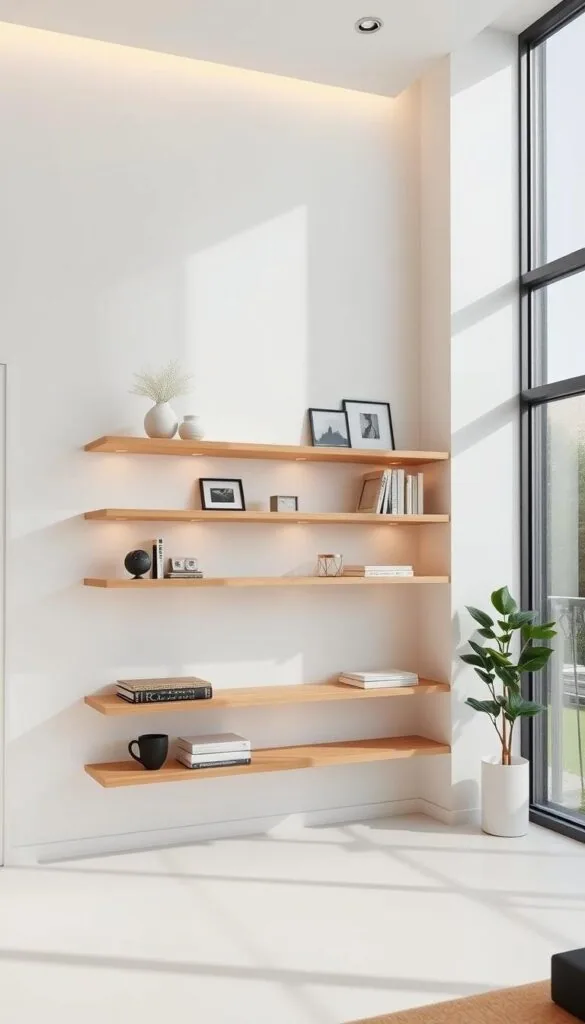
- Dust weekly with a soft cloth to prevent grime buildup.
- Wood veneer: Wipe with a damp cloth and mild soap. Dry immediately.
- High-gloss finishes: Use specialized glass cleaners for a streak-free shine.
Repairing Minor Damage
- Scratches: Apply touch-up pens matching your cabinet’s finish.
- Loose hardware: Tighten screws using a screwdriver. Replace stripped screws promptly.
- Water rings: Polish with a microfiber cloth and furniture polish.
When to Seek Professional Help
Call a pro for:
- Wobbly cabinets signaling loose mounting hardware
- Water damage near sinks or showers
- Deep scratches or peeling finishes beyond DIY fixes
Seasonal checks keep hardware and mounts tight. Stay away from harsh cleaners that can dull finishes. A bit of care keeps your modern wall storage systems looking great for years. This boosts both style and function in any space.
Customizing Your Minimalist Floating Cabinets
Make your floating cabinets show off your style while keeping things simple. Minimalist decor ideas are all about making choices that matter. Choose items that add personality without getting too busy.
Adding Personal Touches
Start with small, meaningful additions:
- Display a single piece of art or a sculptural plant to anchor the space.
- Swap hardware with matte black or brass pulls for subtle contrast.
- Custom finishes like matte lacquer or textured wood grain can add depth without clutter.
“The best minimalist interior design balances function and emotion through thoughtful, restrained choices.”
Incorporating Lighting Features
Highlight your cabinets with smart lighting solutions:
- Install LED strips under shelves for ambient glow.
- Use recessed downlights above cabinets for task-focused illumination.
- Pair with smart systems like Philips Hue for adjustable ambiance.
Using Accessories for Functionality
Enhance utility with minimalist-friendly add-ons:
- Attach slim floating shelves from brands like Muji for extra display space.
- Mount a sleek mirror to double as decorative and functional storage.
- Add modular organizers like ’s Kallax units for hidden storage.
Budgeting for Minimalist Floating Cabinets
Knowing the costs of minimalist floating cabinets helps you plan without overspending. Whether you want sleek contemporary floating shelves or custom cabinetry, smart budgeting is key. It ensures style and savings go hand in hand.
Average Costs and How to Save
Prices vary a lot based on materials and design. Budget options start at $50–$100 per linear foot for standard contemporary floating shelves. On the other hand, high-end minimalist floating cabinets with custom finishes can cost $300+.
Save by choosing stock hardware, timing purchases during seasonal sales, or opting for semi-custom options over fully tailored designs.
- Budget: Particleboard or MDF (under $100/ft)
- Mid-range: Solid wood or lacquer finishes ($100–$250/ft)
- High-end: Custom materials like marble or metal ($250+/ft)
DIY vs. Professional Installation Costs
Going solo can save on labor costs but needs precision. Professional installers charge $150–$300+ per hour. Their expertise avoids costly mistakes. DIYers save upfront but might spend extra on tools like brackets or anchors.
- DIY: Materials only ($200–$500 total)
- Professional: Labor adds $300–$800 extra
Long-term Value and Investment
Quality cabinets pay off over time. Durable minimalist floating cabinets resist wear, reducing replacement costs. Real estate trends show homes with clean-lined storage like contemporary floating shelves sell 10–15% faster due to modern appeal.
Where to Buy Minimalist Floating Cabinets
Looking for sleek wall-mounted cabinets or floating storage solutions? Check out top U.S. retailers. Brands like IKEA, West Elm, Room & Board, and Crate & Barrel have modern designs perfect for small spaces. Online sites like Wayfair and Amazon have more choices but be careful.
- Top Retailers: Check out sleek wall-mounted cabinets at showrooms or online catalogs.
- Online vs. In-Store: Online shopping lets you compare prices and get delivery. But, in-store visits let you feel finishes and try drawers.
- Price-Quality Balance: Compare prices by looking at warranties and materials like MDF or solid wood. Choose retailers with clear return policies.
Ask about assembly help and delivery times. Read reviews to find out about common problems like uneven finishes or unstable mounts. Look for sellers with clear care guides to keep your floating storage solutions looking good over time.
Real-Life Inspiration: Floating Cabinet Designs
See how homes have adopted minimalist design with floating cabinets. These modern storage solutions save space and boost style. Let's look at real examples that bring ideas to life.
Case Studies: Successful Transformations
In a 500-square foot studio, a New York designer used slim shelves and under-window cabinets. This maximized storage without clutter. Another project in Austin turned a chaotic garage into a minimalist workspace with custom modern wall storage units. These examples show how minimalist interior design works in different spaces.
Customer Voices: What Users Say
“The floating cabinets from IKEA’s Billy series completely changed my kitchen. No more overcrowded counters!” – Sarah M., Portland
On Houzz, 85% of users say they improved organization and style with these units. Check Wayfair and Amazon for reviews on durability and ease of installation.
Follow the Trend: Social Inspiration
- Search Instagram for #floatingcabinetlife to see before/after transformations
- Pin ideas from Pinterest boards like “Modern Wall Storage Hacks”
- Explore Houzz’s “Minimalist Cabinets” directory for pro-designed layouts
Look at these platforms for ideas that fit your home's style. Even small changes, like adding a shelf, can start a minimalist makeover.
Conclusion: Elevate Your Space with Minimalist Design
Minimalist floating cabinets are more than just furniture. They are a way of life. They blend usefulness with beauty, changing how we see our homes. They help us focus on what's truly important.
Emphasizing the Importance of Simplicity
Simplicity brings order to our lives. Minimalist home organization with floating cabinets clears out clutter. This makes our spaces feel calm and open.
Their simple design and hidden storage make every inch count. This avoids overwhelming our senses.
Encouraging Creativity and Personalization
Even in minimalism, there's room for personal touches. Minimalist decor ideas come alive with thoughtful additions. Think under-cabinet lights or textured finishes.
Every choice should show your style while keeping things simple.
Final Thoughts on Floating Cabinets
From kitchens to bathrooms, floating cabinets are a great investment. Their simple design fits any style, making them a smart choice for the long haul. Start with something small, like a shelf, and add more as you go.
Remember, minimalism is about making intentional choices. Let each cabinet reflect your purpose and passion. This way, your home becomes a true reflection of you.